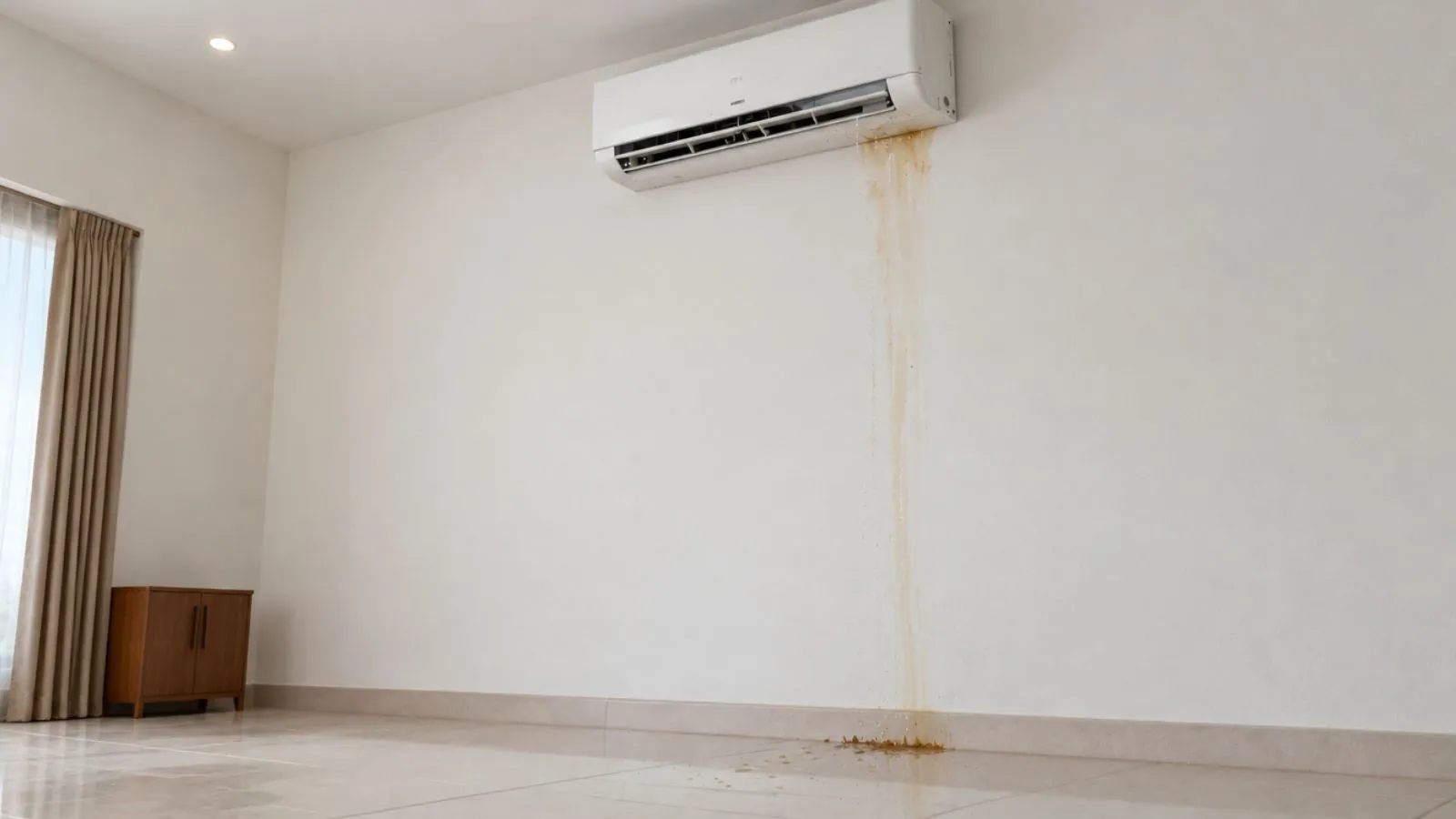
If an air conditioner is leaking, turn it off at the thermostat and at its breaker, then call the 24/7 line. A running system keeps making condensate, so the leak keeps growing until the cooling stops or the drain is cleared.
AC leak water damage is the harm done by condensate that has nowhere to go: stained ceilings under an attic air handler, wet closet floors, damp walls below a wall-mounted unit and drywall that swells where an overflow pan sits. This page covers what happens to the structure. The air conditioning contractor repairs the system, and water mitigation or water damage cleanup handles the rest.
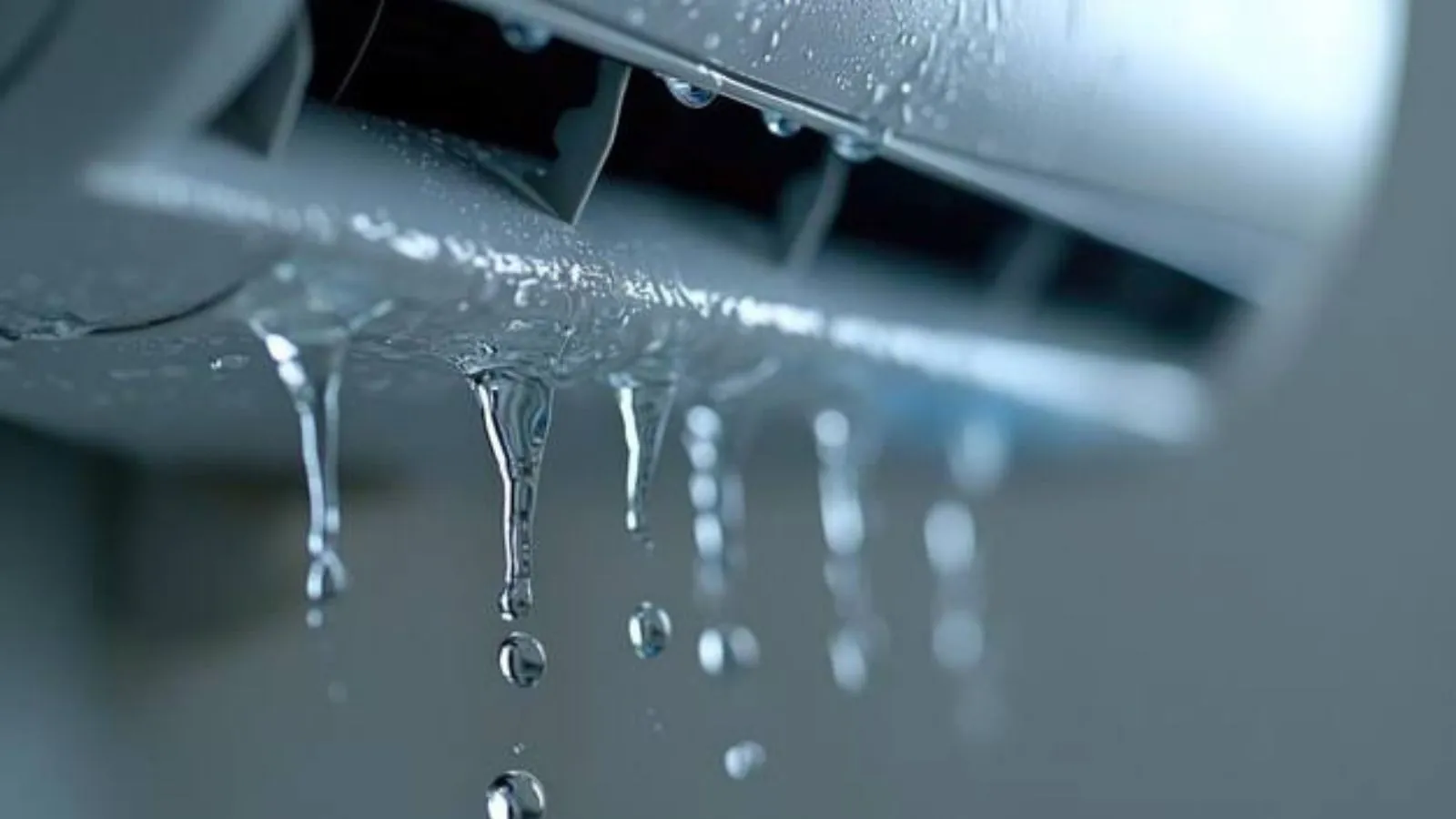
Why air conditioners leak so often in desert homes
An air conditioner pulls moisture out of the air as it cools. That water, called condensate, collects in a pan and drains away through a small line. When the line clogs with algae and sludge, the pan fills and spills. Long cooling seasons give the line a lot of time to clog.
A second cause is a frozen evaporator coil. Restricted airflow, a dirty filter or a refrigerant problem can ice the coil, and when it thaws the volume of water overwhelms the pan. A cracked drain pan, a loose connection and a pump that has failed are the other common sources.
Where the equipment sits decides what gets wet. An air handler in an attic drips through a ceiling. A closet unit wets the floor and the wall behind it. A wall-mounted unit stains the wall below. A rooftop unit can send water through the roof deck. Evaporative coolers use water differently, and a leak there is a failed line or float, not condensate.
Stains and drips below an air conditioner
A stain below an air conditioner often shows how long the leak has been running. These are the usual patterns.
| What you notice | What it usually means | What to do |
|---|---|---|
| Ceiling stain below an attic unit | The pan or drain line has overflowed into the ceiling | Turn off the system and call, since the ceiling may be holding water |
| Rust-colored streaks under a wall unit | Condensate has been running down the wall for some time | Shut the unit off and photograph the stain |
| Water in a closet around the air handler | The pan is full or cracked | Turn the system off and stay clear of wet outlets |
| Ice on the coil or lines | Airflow or refrigerant is restricted | Switch to fan only and call an air conditioning contractor |
| Musty smell near vents | Moisture has settled in insulation or ductwork | Call because wet materials can keep smelling |
| Wet carpet along an interior wall | Water traveled along the floor from the unit | Pull back what you can and call for drying |
Condensate is usually clean at first, but it picks up dust and slime from the pan.
Safety steps before the crew arrives
Electrical parts are close to the water, and attic spaces can be hot and cramped. Keep it simple.
- Turn the air conditioner off at the thermostat, then at its breaker if you can reach the panel from dry ground.
- Do not stand under a stained or bulging ceiling. It can hold water and drop without warning.
- Stay out of a hot attic unless you must go in, and never step between joists onto the ceiling below.
- Set a bucket under any drip and photograph the unit, the pan, the stain and the wet area.
- Do not try to clear a drain line with a household vacuum while standing in water.
- Call the 24/7 line and say where the unit sits and which rooms are below or next to it.
System shut off and the ceiling still dripping? Call to get the water out and the drying started.
☎ (760) 769-1159How the water gets removed and the structure dries
Crews begin by extracting standing water from floors and pans. Moisture meters read ceiling drywall, wall bases and subfloor, and a thermal imaging camera shows where water traveled. In an attic, wet insulation is removed because it keeps holding water against the ceiling.
Ceiling and wall repair
Stained or swollen drywall is cut out in clean lines so the cavity can dry. Air movers and LGR dehumidifiers then run until readings return to a dry standard. Readings are logged on each visit, and ANSI/IICRC S500 is the reference the crew uses for water damage restoration. After that, water damage repair covers the drywall, texture and paint that were removed.
What the crew does not do
Clearing the line, replacing a pan and recharging the system are air conditioning work. A restoration crew can work the same day as the technician, and the records from both help with an insurance claim. If the area smells damp for days, mold remediation is the next step to ask about.
What changes the cost of AC leak repair
A leak caught in a day is a small drying job. One that ran for weeks may have soaked insulation, drywall and framing. The scope changes with the length of the leak, the ceiling or wall finish and how many rooms sit below or beside the unit.
Attic access also matters. Tight attics slow insulation removal and equipment setup. Textured ceilings add repair labor. The air conditioning repair is a separate cost from the water damage work.
Insurance and an air conditioning leak
Sudden overflows are usually treated differently from slow leaks that run for months. The California Department of Insurance says homeowners policies do not cover flood but do cover other kinds of water damage, so a condensate overflow generally falls under the regular policy when it was sudden. Gradual seepage is often excluded.
The department also advises making temporary repairs and keeping a log of calls and paperwork. Keep the air conditioning invoice, photos of the pan and the written scope of drying. Your insurer decides what your policy covers.
Mistakes to avoid and how to head off the next leak
Do not keep running a leaking system to stay cool for another day. The coil keeps making water, and the overflow grows. Do not dry a ceiling with a space heater, which hides the water inside. Do not paint a stain before readings show the ceiling is dry.
Prevention is routine care. Change filters on schedule. Have the condensate line flushed during the seasonal service. A float switch in the pan can shut the system down before an overflow. Keep an eye on stains under wall units.
California requires a state contractor license for air conditioning work above a set dollar value, according to the Contractors State License Board. The City of Indio says a building permit is required before work begins, so ask the Building and Safety Division if a replacement unit needs one.
Nearby towns and homes where leaks hide
Seasonal homes can leak for weeks before anyone returns, which is a common story in La Quinta. Larger houses and casitas, such as those in Indian Wells, often have more than one air handler to check.
Frequently asked questions
Yes. Dispatch is open all night and all weekend, and a same-day visit happens when a crew is available. The dispatcher will not quote an arrival time.
Switch the air conditioner off at the thermostat and the breaker until a technician and the crew have looked at it.
The usual cause is a clogged condensate drain line or a full pan. A frozen coil that thaws and a cracked pan also cause leaks. An air conditioning contractor finds the cause.
It starts clean, but it picks up dust and slime from the pan and lines. That is why the crew checks insulation and drywall for odor and treats the wet area as needed.
A sudden overflow can be addressed by a homeowners policy, while slow leaks and maintenance issues are treated differently. Photos, the contractor invoice and a call log help, and your insurer decides.
No. An air conditioning contractor repairs the system. Our crews dry and clean the structure after the water, and they can coordinate timing so both jobs move quickly.