When water is coming through a ceiling, keep people out from under it and call the 24/7 line. If the rain has stopped, the roof still needs a repair, and the ceiling, insulation and walls still need drying. The two jobs are separate and should start at the same time.
Roof leak water damage is what rain does inside a building once it finds a way past the roof: stained and sagging ceilings, soaked attic insulation, wet wall tops and the moisture that stays behind after the sky clears. This page covers the interior side. For the roof itself you need a roofer, and for walls and ceilings after drying, water damage repair is the next step.
Why a dry climate still has roof leaks
Rain is rare in the Coachella Valley, which is exactly why roofs get caught out. A roof that sits through months of heat and sun ages quietly. Sealant around vents and skylights cracks, flashing lifts at its edges, and flat or low slope roofs hold shallow ponds that a steeper roof would shed. Then a storm arrives and every weak spot is tested at once.
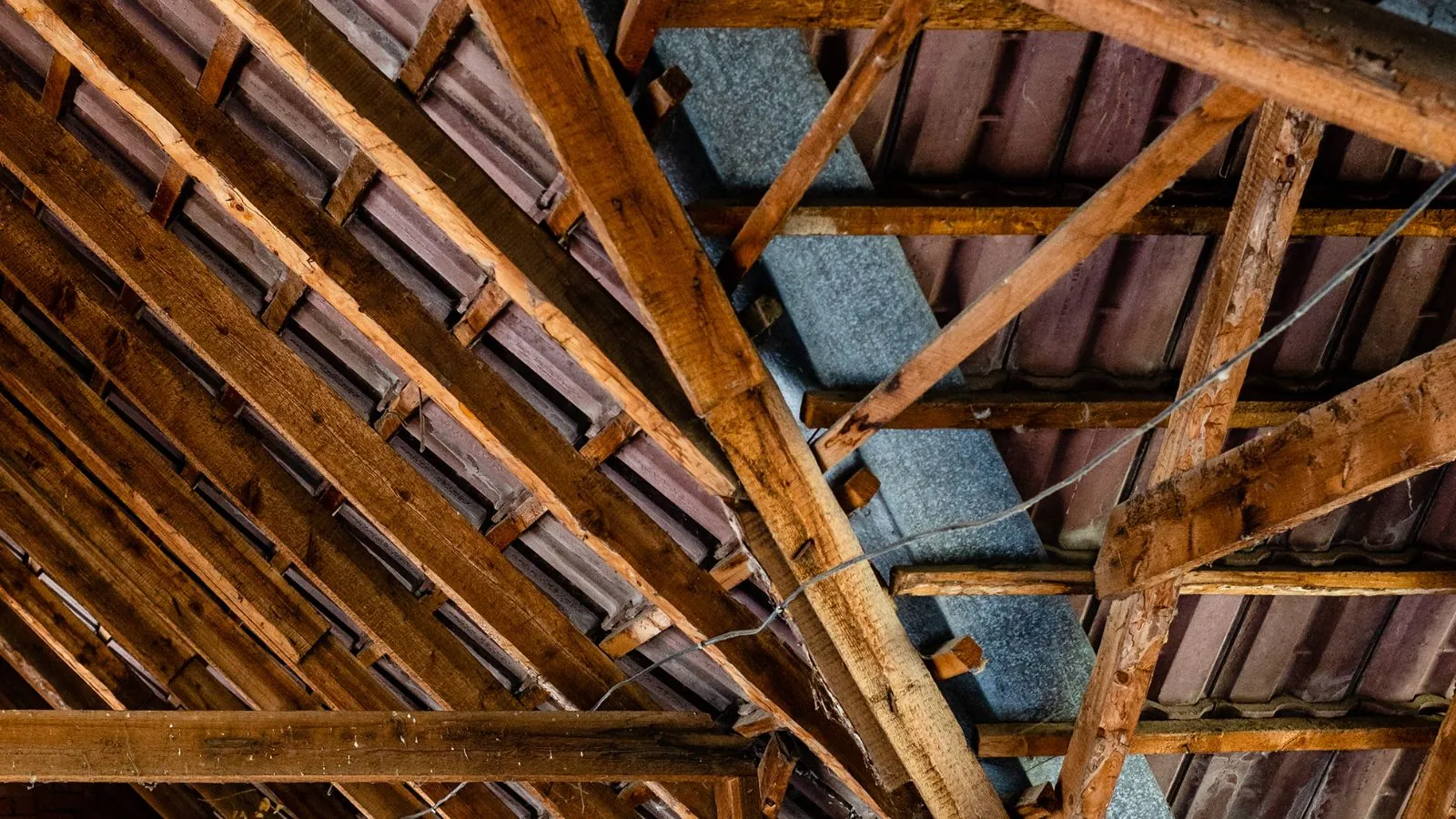
Tile roofs add their own pattern. Tiles can slip or crack, and the underlayment below does the real waterproofing. When that layer has dried out or torn, water gets through without any visible hole in the tile. Roof-mounted equipment such as solar mounts, cooler stands and vent stacks each add penetrations that can open up.
The 2023 storm shows the scale. Tropical Storm Hilary ran from August 19 to 21, and Riverside County proclaimed a local emergency that cited flooding in neighborhoods, business districts and roadways, according to the county proclamation. Water arrived from above as well as from the ground, and roofs across the valley were tested.
Ceiling and wall signs after a roof leak
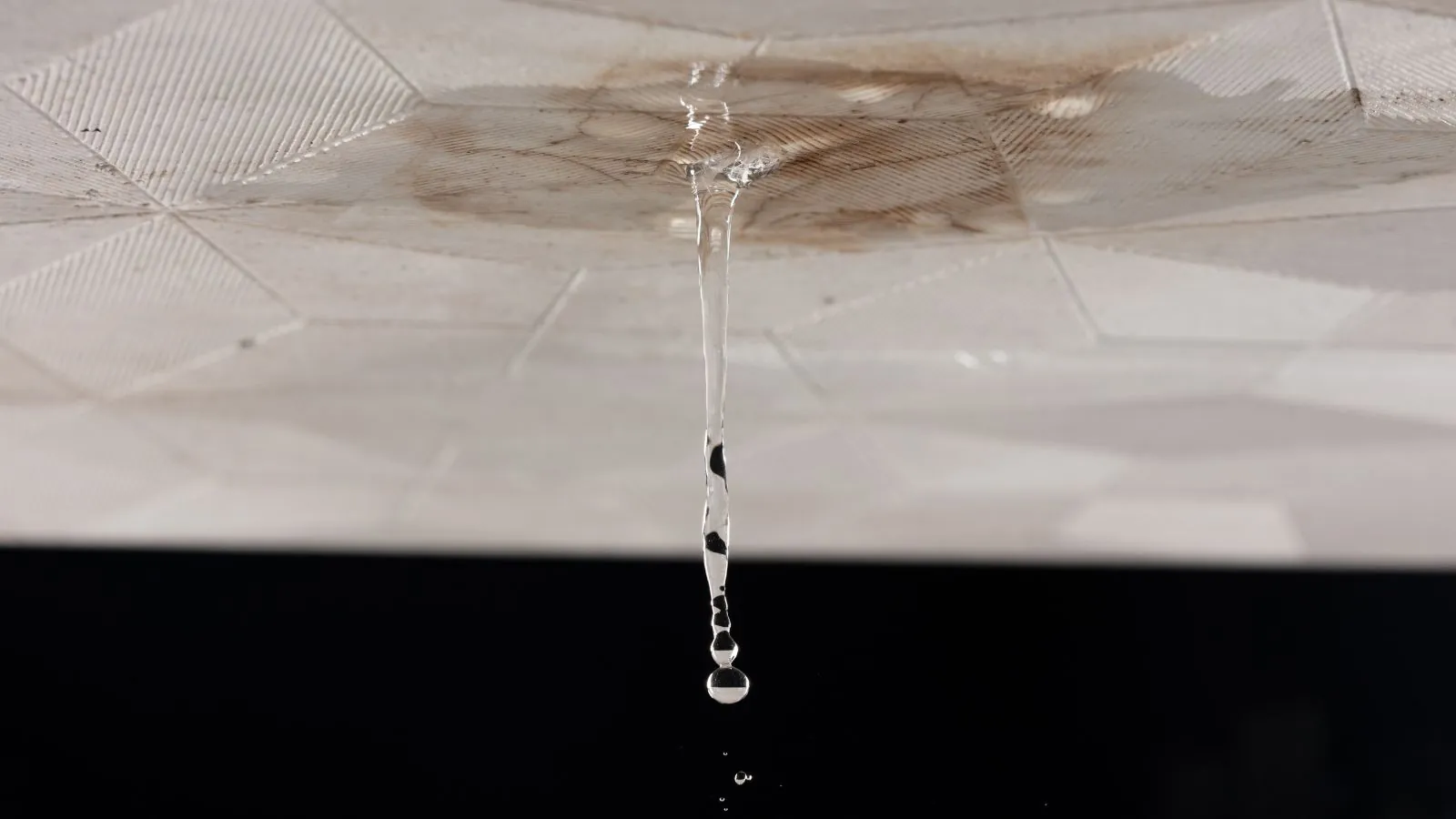
A stain tells you where water ended up, not where it came in. Water can travel along rafters and across the top of drywall before it shows itself.
| What you notice | What it usually means | What to do |
|---|---|---|
| Brown ring that grows after rain | Water is entering above and spreading through the ceiling | Keep the area clear and call for assessment and drying |
| Bulging or sagging ceiling | Drywall is holding pooled water | Stay out from under it and do not poke it |
| Dripping from a light or fan | Water is following wiring into the fixture | Turn off the fixture at the panel if you can reach it safely |
| Peeling paint at the wall top | Water is running down inside the wall | Mark the edge of the stain and photograph it |
| Musty attic smell or dark insulation | Insulation has absorbed water | Call before the material starts to grow mold |
| Damp spot weeks after the storm | Materials never finished drying | Moisture readings will show how far it spread |
The visible stain is often smaller than the wet area behind it.
Roof leak safety steps for the first hour
Stay on the ground. A wet roof is slippery, and the work belongs to a roofer with the right gear.
- Move furniture and electronics out from under the leak and set a bucket under any drip.
- Do not stand under a bulging ceiling. If it is full of water, it can drop without warning.
- Turn off power to a room if water is dripping through a light fixture, and do it only from dry ground.
- Take photos of the stain, the drip and the roof from the ground before anything is moved.
- If you can reach the attic safely, look for wet insulation and note where it is darkest.
- Call the 24/7 line, then ask a roofer about a temporary tarp.
Ceiling stained or dripping? Call the 24/7 line and describe what you see.
☎ (760) 769-1159How the interior gets dried and cleaned
The crew starts by finding how far the water went. Moisture meters read the ceiling, wall tops and framing. A thermal imaging camera picks up cooler, wetter areas behind painted surfaces so the work focuses where the water is, not just where the stain shows.
Attic and ceiling work
Wet attic insulation is removed because it holds water for a long time and loses its value once soaked. Sagging or stained drywall is cut out in clean lines so the cavity above can dry. Air movers and LGR dehumidifiers then run until readings reach a dry standard.
What the crew does not do
Roof repair belongs to a roofer. Crews dry and clean the interior and keep records. If you want a reference for how the work is planned, ANSI/IICRC S500 describes the steps for water damage restoration, and a crew can explain how it applies to your loss.
What changes the cost of roof leak cleanup
Cost depends on how much of the building got wet, not on how bad the stain looks. The main factors are listed here.
The number of rooms under the leak, how long the water ran before anyone saw it and whether it reached the attic insulation all change the scope. Ceiling height matters because high ceilings need more access gear. Finish materials such as textured ceilings, tile or wood trim add labor when they must be removed and replaced.
Every roof leak has two bills, the roof and the interior. Keeping the records separate helps when an insurer reviews them.
Insurance and a roof leak
Homeowners policies commonly address sudden storm damage, but the cause matters. A roof that failed from age or neglect is treated differently from one damaged by a storm. California Department of Insurance claims rules say an insurer must acknowledge a claim within 15 calendar days and accept or deny it within 40 days of receiving proof of claim.
The department also advises making temporary repairs to prevent more damage and keeping a log of calls. A tarp and interior drying are the repairs insurers expect. Keep receipts, photos and the roofer's written note on the cause. Ask your insurer what your policy covers.
Mistakes to avoid and how to head off a repeat
Do not climb onto a wet roof. Do not paint over a stain before the area is dry, because the stain will come back and the moisture stays trapped. Do not leave soaked insulation in the attic, since it keeps the framing damp for weeks.
Prevention is simple. Have a roofer check flashing, vent seals and tile underlayment before storm season. Keep gutters and flat roof drains clear. After any storm, look at ceilings and attic insulation within a day or two.
If roof framing or sheathing must be replaced, the City of Indio says a building permit is required before work begins, so ask the Building and Safety Division whether your repair needs one.
Nearby towns and related storm pages
Crews also serve Coachella and Indian Wells. If the water came with wind, drains or runoff, see storm water damage. When a ceiling stays wet after the roof is repaired, structural drying explains how readings decide when it is done.
Frequently asked questions
Yes. Calls are taken day and night, including storms and holiday weekends, and a crew can come the same day when one is available. No arrival time is given over the phone.
Until then, move belongings out from under the leak and stay clear of any bulging ceiling.
No. A roofer repairs the roof. Our crews handle the interior, which means extraction, removing wet insulation and drywall and drying the structure. Both jobs should start quickly, and neither has to wait for the other.
Leave it alone and keep people out from under it. A ceiling that holds water can fall, and a crew can open it in a controlled way with protection in place.
Often it can, when a sudden event such as a storm caused the opening. Wear and neglect are treated differently. Keep photos, receipts and a log of calls, and ask your insurer or the California Department of Insurance about your policy.
Dry time depends on how much water entered, the materials involved and the air in the room. The crew takes moisture readings on each visit and the structure is released when the readings meet the dry standard, not on a set number of days.