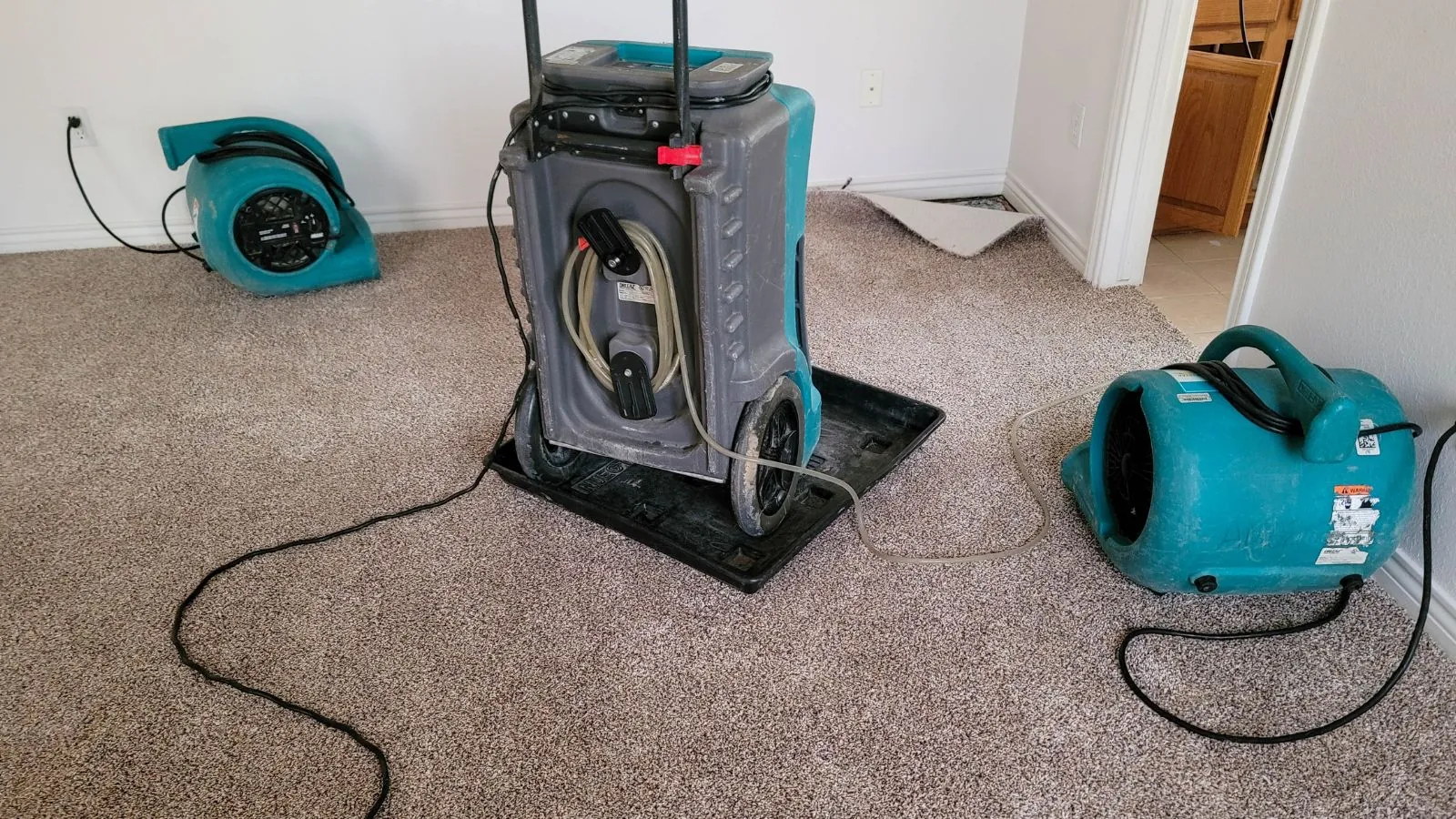
Structural drying starts once the standing water is gone and ends when readings show the building is dry. If a wall, floor or ceiling got wet, call the 24/7 line so crews can map the moisture and set equipment before the materials begin to break down.
Structural drying and dehumidification is the controlled removal of moisture from framing, subfloors, wall cavities, ceilings and concrete using air movers, dehumidifiers and measurement. Emergency water removal gets the water out and water mitigation covers the first days. This page explains the drying itself.
What gets dried and why surface dry is not enough
Water soaks into materials and keeps moving. Drywall wicks it upward. Insulation holds it against framing. Wood subfloor absorbs it and releases it slowly. Concrete releases moisture over weeks. A wall can look dry on the surface while its cavity stays wet.
Desert air is dry, and that helps, but it does not do the job on its own. A closed house with the air conditioning running dries materials slowly, and water trapped behind baseboards, under flooring and inside insulation does not leave on its own. Opening windows is not a plan, and it can let in dust and outdoor heat.
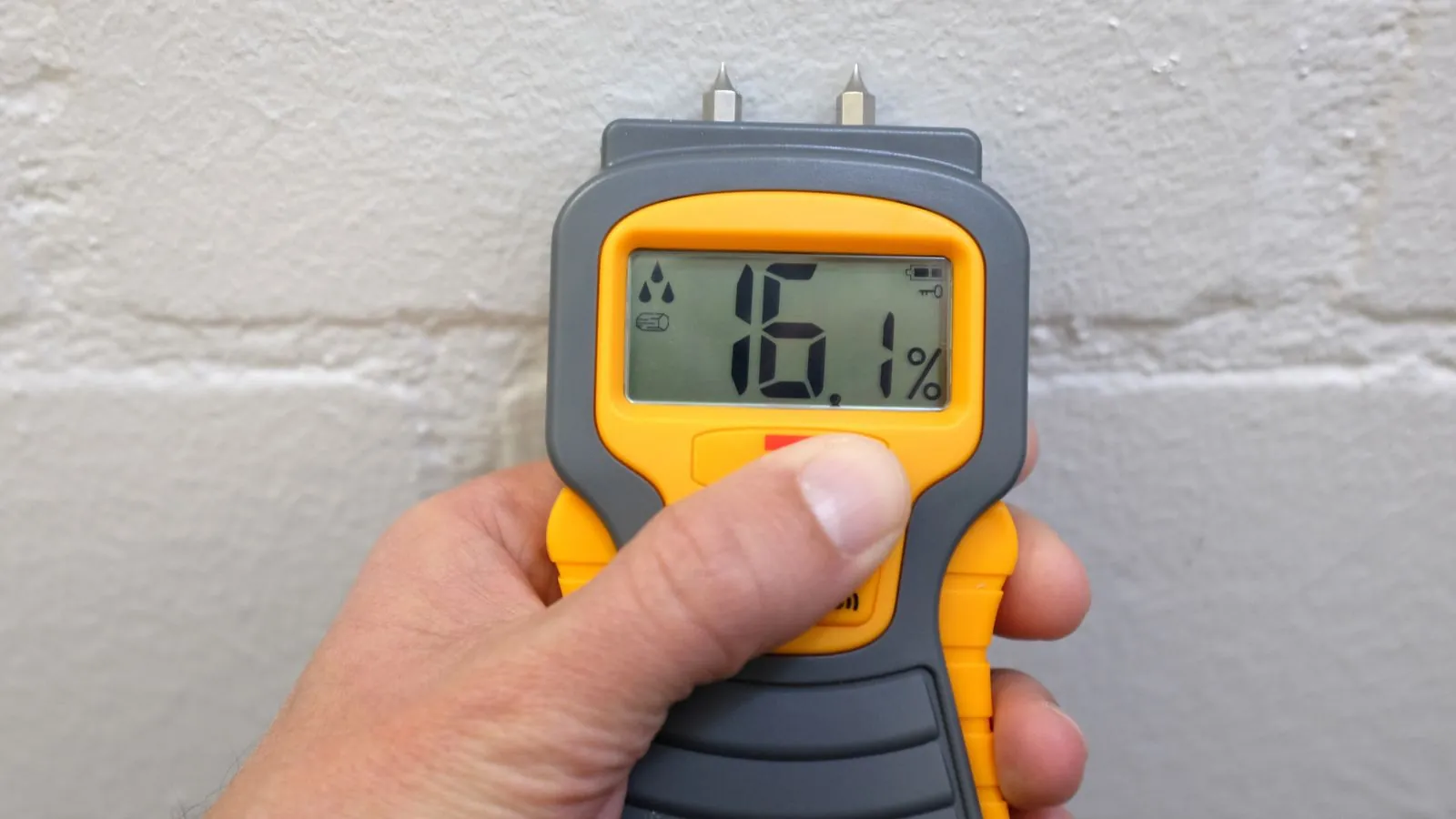
The goal is a dry standard for each material, measured with a meter. The plan sets that goal, the equipment reaches it and logs prove it.
Gear, setup and what each piece does
Each tool has a job. The crew chooses and positions them based on readings, not by rule of thumb.
| Equipment | What it does | Where it is used |
|---|---|---|
| Moisture meter | Reads moisture in drywall, wood and concrete | Walls, floors, baseboards and framing |
| Thermal imaging camera | Shows cooler wet areas behind surfaces | Ceilings, walls and floors |
| Air mover | Moves air across a wet surface to speed evaporation | Floors, wall bases and carpet |
| LGR dehumidifier | Pulls moisture out of the air in a closed space | Rooms where the air is humid |
| Desiccant dehumidifier | Dries air using a drying wheel, useful in low temperature or low humidity | Large or cold spaces |
| Drying mat or panel | Pulls water out of hard floors through a vacuum | Hardwood and some engineered floors |
| HEPA air scrubber | Filters dust and particles during demolition | Areas where materials are cut out |
Equipment counts are decided on site from the room size and the readings.
How a drying job runs from start to finish
The crew first records readings across the area to set a baseline. Then they remove what cannot be dried, such as wet pad and soaked insulation. Drywall is opened where moisture is trapped. Equipment is placed so air moves across the wet surfaces, and the room is closed so the dehumidifier can work.
Daily monitoring
Each visit, the crew takes readings at the same points, adjusts the equipment and records the progress. Equipment is moved as areas dry. If a reading stalls, the crew checks for a hidden source or a wet material that was missed.
Finishing and release
When readings meet the dry standard, the equipment is removed and the structure is ready for repair. Crews use ANSI/IICRC S500 as the reference for how drying is planned and documented. If walls or floors need rebuilding, water damage repair is the next step.
Safety steps while the equipment runs
Drying equipment runs on household power and moves air, so a few habits help.
- Keep children and pets away from cords and spinning blowers.
- Do not unplug, move or turn off the equipment, because it is set in a pattern for the drying plan.
- Do not run other high draw appliances on the same circuit if the crew asks you to avoid it.
- The City of Indio storm page advises shutting off power at the breaker if water rises near outlets, and the same caution applies to a wet area during drying.
- Keep the area closed as directed so the dehumidifier can pull moisture from the right air.
- Call the 24/7 line if a unit stops, makes noise or a reading looks wrong.
Water stopped but the building still feels damp? Call to schedule moisture mapping and drying.
☎ (760) 769-1159What changes the cost of structural drying
Drying is priced from the work involved, not from a flat rate. The key factors are the number of rooms, the type and amount of wet material, the number of days equipment is needed and how much must be removed to reach trapped moisture.
Concrete and thick wood take longer to dry than drywall. Wet insulation adds removal. Hardwood and tile floors may need special mats. A loss found early costs less than a loss found a week later because less material has absorbed water.
Insurance and drying records
Drying logs are valuable records. The California Department of Insurance advises making temporary repairs to prevent further damage and keeping a log of calls and paperwork, and a drying log shows the work was needed and measured. Ask the crew for the readings and the equipment list.
The department says homeowners policies do not cover flood but do cover other kinds of water damage, so the cause of the water decides the claim. Your insurer decides what your policy covers.
Mistakes to avoid when a building is drying
The common mistake is stopping early because things feel dry. Surfaces dry before cavities do. Another mistake is painting or laying flooring too soon, which traps moisture and invites odor. Heaters and household fans do not substitute for dehumidification.
Do not turn equipment off at night to save power or quiet the noise. Interrupting the cycle stalls the drying. Do not block the airflow with furniture the crew placed away from the wall.
After Tropical Storm Hilary in August 2023, Riverside County proclaimed a local emergency citing flooded neighborhoods and business districts, according to the county proclamation. Storm water that gets into a building needs the same measured drying.
Service area and related pages
Crews carry drying equipment to Palm Desert and La Quinta. For hardwood floors that need special drying, see hardwood floor water damage.
Frequently asked questions
Yes. Calls are answered at all hours, and a crew can start the same day when equipment and technicians are available. An arrival time is not offered during the call.
Leave wet materials where they are when you can, since the crew reads them to map the moisture.
It depends on the materials, the amount of water and the air in the building. The crew takes readings each visit and releases the structure when it meets the dry standard, not on a set number of days.
A closed building holds the moisture that comes out of wet materials. Dehumidifiers pull it out of the air so it does not settle in other materials, and air movers push dry air across the surfaces.
Sometimes. Clean water caught quickly may dry in place, but swollen or stained drywall and wet insulation are usually removed. Readings decide.
Yes. Crews log moisture readings and equipment each visit. Those records show the dry standard was reached, and they help with an insurance claim.