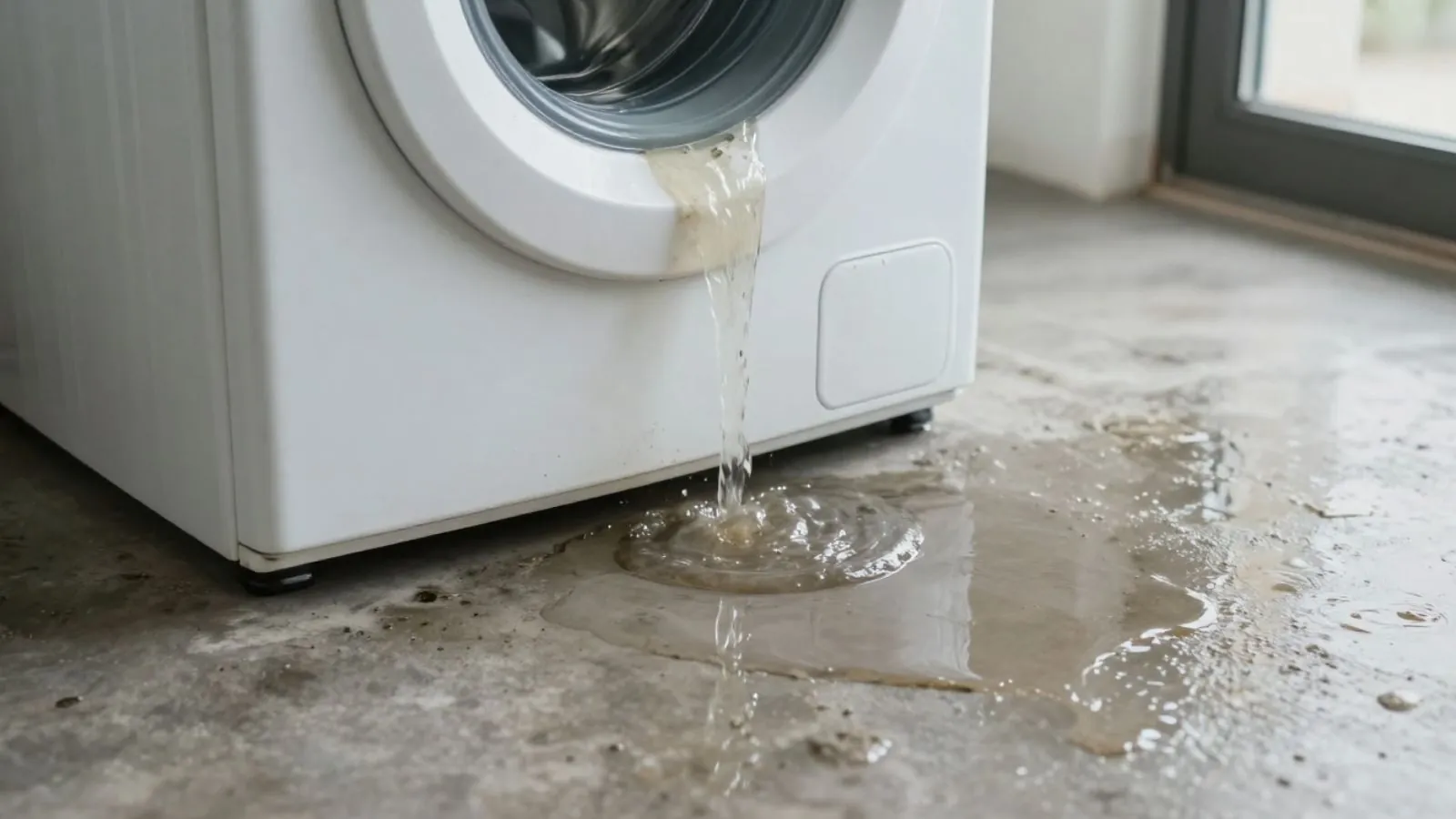
When an appliance leaks, close its shutoff valve or the main water valve and unplug the machine only if the floor is dry. Then call the 24/7 line. Even a small supply leak can run behind a machine for hours before the floor shows it.
Appliance leak water damage is the harm caused by a failed hose, a clogged drain, a cracked inlet valve or an overflowing pan: swollen flooring, wet cabinet bases, damp subfloor and walls that wick water up from the floor. Water mitigation dries what the water reached, and water damage cleanup handles discharge water that carries soil and detergent.
Which appliances cause the most trouble
Washing machines top the list because the supply hoses stay under pressure all day and the drain can overflow. Rubber hoses harden over the years, and a burst hose can run until someone turns the tap. A clogged drain standpipe sends wash water onto the floor instead of down the wall.
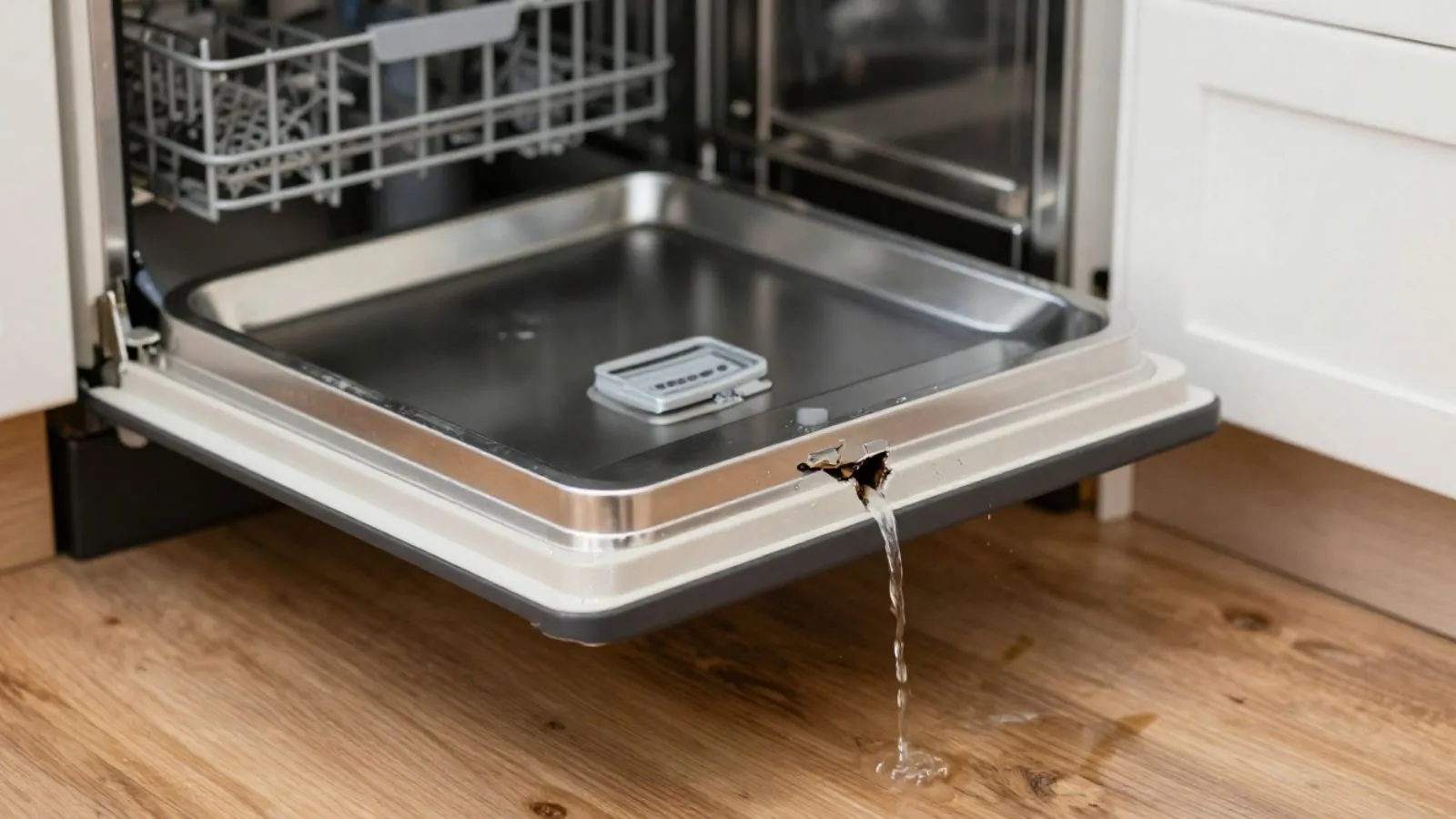
Dishwashers leak at the door gasket, the inlet valve or the drain hose. Refrigerators with ice makers and filtered water dispensers rely on a thin plastic line that can crack and drip into the floor. Water softeners and reverse osmosis units sit under sinks or in garages and can release water through a loose fitting.
Desert homes add one more source. Appliances often sit in laundry rooms and garages where leaks are not seen for days, and homes left empty for part of the year can run a failed hose for a long time before anyone returns. The water category depends on the appliance, which is why the crew asks which one failed.
Which appliance, what water, what happens next
Water from supply lines is clean at first. Discharge from machines picks up soil, detergent and bacteria. This table follows the categories described in the ANSI/IICRC S500 standard.
| Appliance | Typical water | What the crew does |
|---|---|---|
| Supply hose or inlet valve | Clean supply water | Extract, dry and monitor, since carpet pad can often be dried when caught early |
| Washer drain overflow | Category 2 gray water | Extract, clean and treat surfaces, remove pad and porous materials that held the water |
| Dishwasher leak | Category 1 or 2, depending on source | Extract water, lift flooring edges, dry the cabinet base |
| Refrigerator ice maker line | Clean supply water | Pull the unit, extract and dry the floor and wall behind it |
| Water softener or filter fitting | Clean supply water | Dry the floor, the wall and the cabinet below |
| Appliance drain pan overflow | Category 1 or 2 | Extract and dry, then check the subfloor |
The crew confirms the category on site and adjusts the plan.
Electrical and water safety in the first hour
Appliances combine water and electricity, so take these steps in order.
- Close the shutoff valve behind or beside the appliance. If you cannot reach it, close the main water valve.
- Do not touch the appliance, cords or outlets while standing in water. Turn off the breaker only from dry ground.
- Stop the cycle and do not run the machine again until a repair person checks it.
- Pull rugs and small items off the floor and photograph the water, the hose and the damage.
- Move cleaning products and chemicals away from the wet area.
- Call the 24/7 line and say which appliance failed and where it sits in the house.
Appliance shut off and the floor still wet? Call to start extraction and drying.
☎ (760) 769-1159How the crew removes the water and dries the room
Extraction comes first. Portable units pull water from carpet and hard floors, and wet vacuums clear what pools under cabinets and toe kicks. When a washer or refrigerator is involved, the unit is moved so the wall and floor behind it can be reached.
Moisture meters then map the floor, the wall base and the cabinet bottoms, and a thermal imaging camera shows cooler wet spots. Vinyl, laminate and engineered wood often hold water at the edges and underneath, so the crew checks beyond the visible wet area.
Air movers and LGR dehumidifiers dry the space, and drying mats can pull moisture out of hard floors. Readings are logged each visit. If a floor or wall must be replaced, kitchen water damage and water damage repair cover the rebuild.
What changes the cost of appliance leak cleanup
A hose that failed while someone was home is a small job. A leak that ran overnight or while the house was empty is larger. The scope changes with the floor type, the number of rooms the water crossed and whether cabinets or drywall were reached.
Gray water adds cleaning and removal steps because pad and porous materials may not be kept. Access to tight laundry rooms and under-counter spaces also changes labor. Repairing or replacing the appliance is a separate cost from the water damage work.
Insurance and appliance leaks
Sudden appliance failures are a common reason for water claims. The California Department of Insurance says homeowners policies do not cover flood but do cover other kinds of water damage, so a failed hose generally falls under a regular policy. Long-term seepage is often excluded.
The department advises making temporary repairs to prevent further damage and keeping a log of calls and paperwork. Save the failed hose or part if you can, photograph the appliance label and keep the repair invoice. Your insurer decides coverage under your policy.
Mistakes to avoid and how to prevent the next leak
Do not slide a heavy appliance across wet flooring, because it can tear the surface. Do not run the machine again to see if it still leaks. Do not dry a wall base with a hair dryer or a space heater, since surface heat hides water inside.
Replace rubber washer hoses with braided ones every few years and look at the connections twice a year. Turn off the washer valves when you travel. Clean the dishwasher filter and the washer standpipe. Put a pan under the water heater and refrigerator line when the layout allows.
The Indio Water Authority supplies the water to your meter, according to its website, and the shutoff at the meter is the backup if an appliance valve fails. Practice finding it before you need it.
If a repair means moving plumbing or opening walls, the City of Indio permit information says a building permit is required before work begins, with a short list of exemptions. The Building and Safety Division can say whether yours needs one.
Nearby towns and related pages
Crews work in La Quinta and Indian Wells as well, and the same steps apply there. If the source was a tank, see water heater leak cleanup.
Frequently asked questions
Yes. The line is staffed at night and on weekends, and a crew can often visit the same day if one is available. An arrival time is not promised during the call.
Close the shutoff valve to the machine and keep power off near the wet floor until the crew arrives.
Not always. Supply water starts clean, but drain water from a washer is gray water that carries soil and detergent. Wear gloves, avoid skin contact and let the crew decide what stays and what goes.
Sometimes. Tile and sealed floors often dry in place, while laminate, engineered wood and cabinet bases can swell. Moisture readings decide what can be saved.
A sudden leak is commonly addressed by a homeowners policy, while slow leaks and wear are treated differently. Photos, receipts and a call log help, and your insurer decides what your policy covers.
No. An appliance technician or a plumber repairs the machine and its connections. Our crews dry the structure and clean the area the water reached.