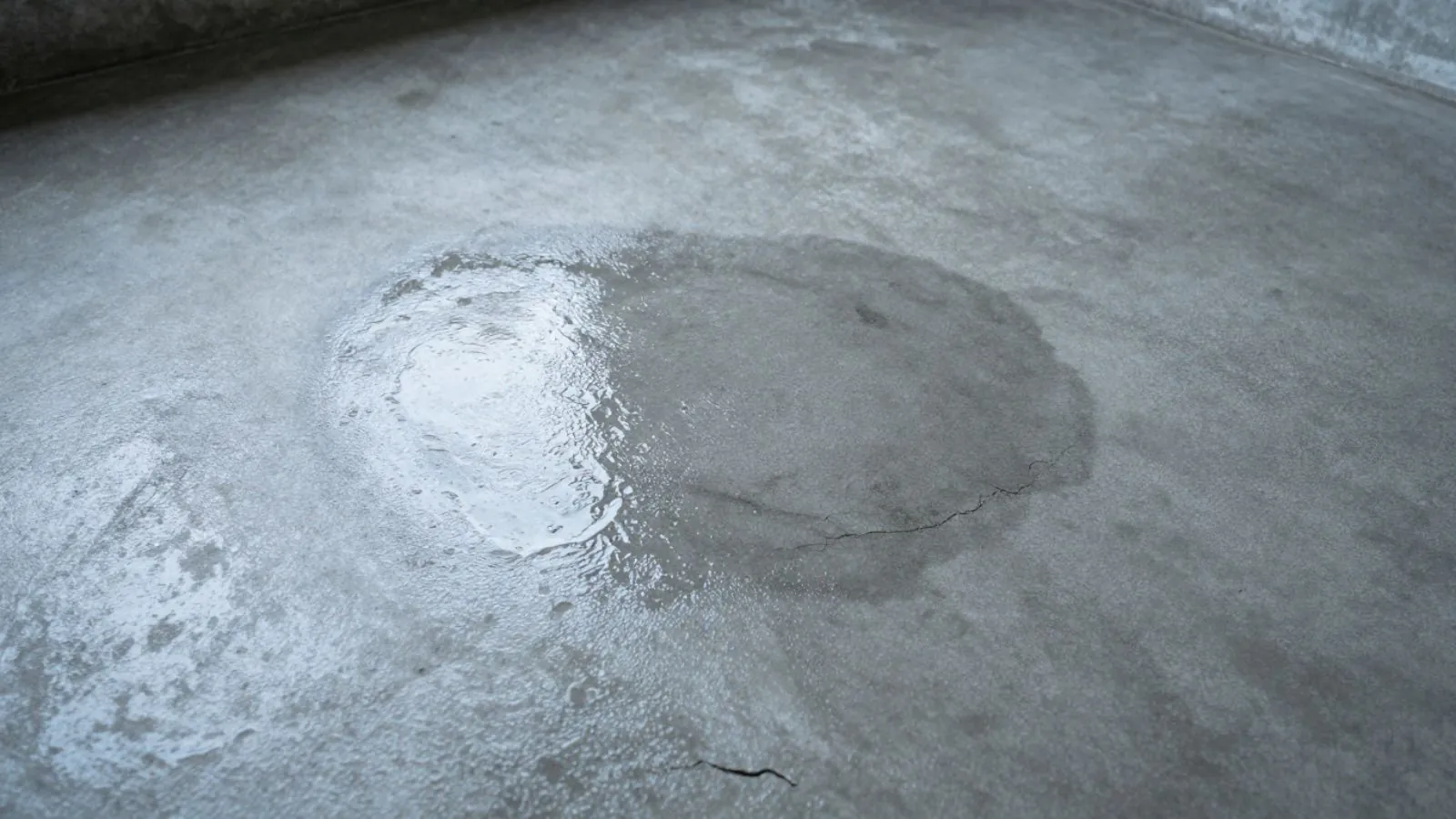
If you suspect a slab leak, close the main water valve and call the 24/7 line. A pipe leaking under concrete cannot be seen, and the water has to go somewhere, usually up through cracks and joints or sideways into walls and flooring.
Slab leak water damage is the harm done when a pressurized line in or under a concrete foundation leaks: damp or warm flooring, lifted laminate, stained baseboards and moisture climbing into walls. Finding and repairing the pipe is plumbing work. Our crews extract surface water and dry the finished floors and walls with water mitigation.
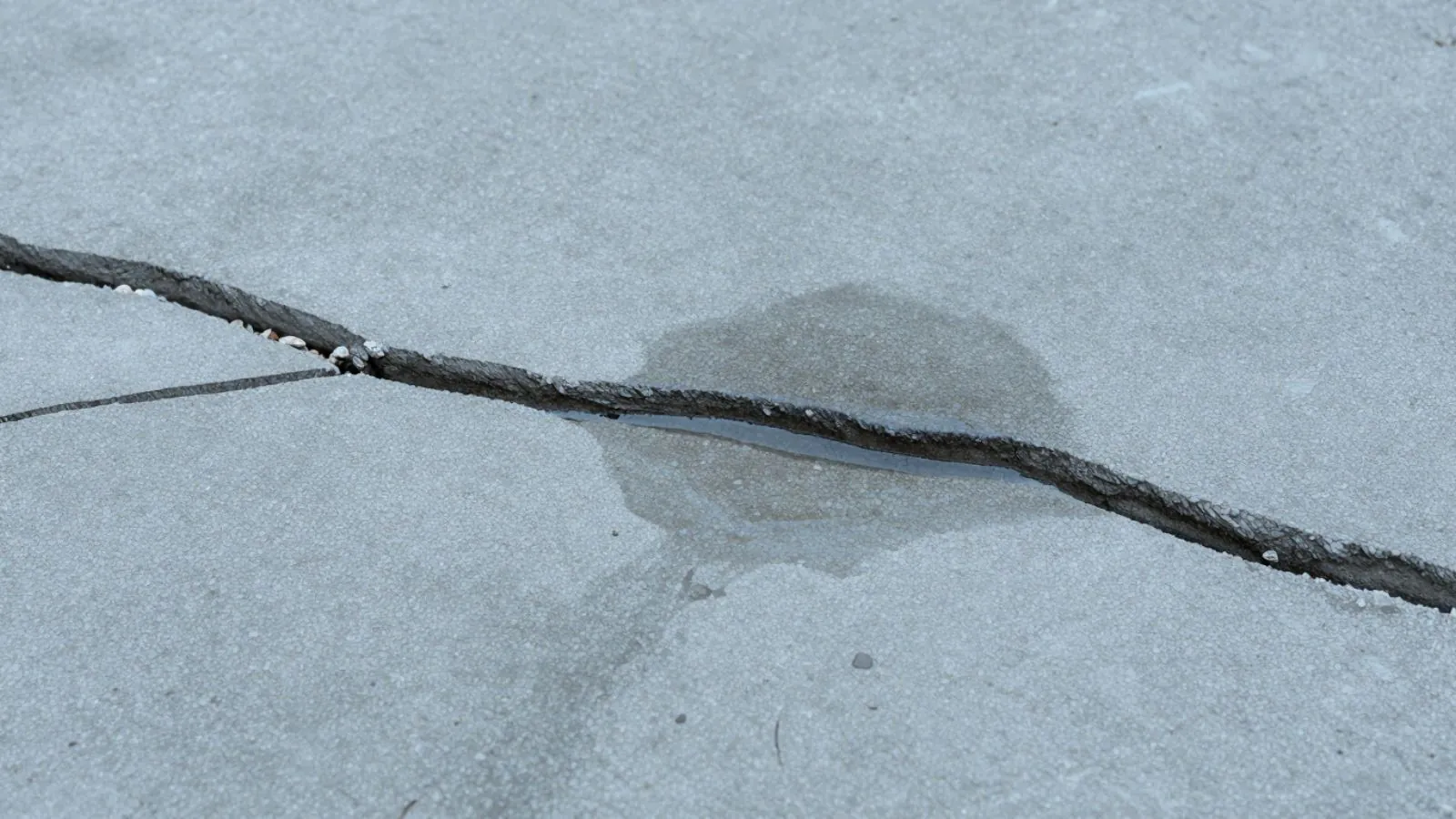
What a slab leak is and how common it is here
A slab leak is a leak in a water line that runs through or beneath a concrete slab foundation. Slab on grade is a common way to build in warm, dry regions, so the problem exists in this valley. We do not have a local count of how many homes are affected, and nothing on this page should be read as a statistic.
In practice most pipe leaks in a house are in walls, attics, fixtures and appliances, and those are covered on the burst pipe page. A slab leak is the less common case that is harder to find. Lines can wear through from corrosion, rub against rock or concrete as the house settles or fail at a fitting under the floor.
Hot water lines under a slab are often suspected because heat can speed wear. A hot spot on the floor or a water heater that seems to run constantly can be a clue. These are only clues, and a leak detection professional confirms the source.
Signs of water coming up through a slab
Water under a slab takes the easiest path to the surface. These signs are the usual ones.
| What you notice | What it usually means | What to do |
|---|---|---|
| Warm or hot spot on the floor | A hot water line may be leaking beneath it | Shut off the water heater supply and call a plumber and the line |
| Water bubbling through a crack or joint | A pressurized line is releasing water into the slab | Close the main valve and call right away |
| Lifting or buckling floor planks | Moisture is rising from below | Do not walk on it and call for readings |
| Damp carpet with no source above | Water is coming up through the slab | Pull back the edge and photograph it |
| Running water sound with taps closed | A line is leaking somewhere | Watch the meter, then close the main valve |
| Unexplained higher water use | Water is leaving the system | Compare the meter with every tap closed |
A plumber with leak detection tools finds the line. We handle the water.
First-hour safety with a wet floor
Water on a floor and a house full of electrical devices call for a careful start.
- Close the main water valve at the house and the shutoff at the water heater supply.
- Stay off a floor that feels warm or looks wet and do not walk barefoot on it.
- Keep power off to wet rooms and turn breakers off only from dry ground.
- Move rugs, shoes and furniture legs off the wet area and photograph the floor and any crack.
- Note the time the meter was last checked and any unusual sounds.
- Call the 24/7 line and a plumber who does leak detection.
Floor wet and the source unknown? Call the line and say where it feels warm or looks damp.
☎ (760) 769-1159Utility side or house side
The pipe from the street to your meter belongs to the water provider, and the Indio Water Authority says on its website that it supplies the city's drinking water. The pipe after the meter is yours. Knowing which side leaks tells you whether to call the utility or a plumber.
How the crew dries a floor over a leaking slab
Water under a slab cannot be pumped out the way standing water is. Crews extract what has surfaced, then dry the finished floors, baseboards and walls that wicked it up. Moisture meters read flooring, drywall and the concrete surface, and a thermal imaging camera shows the damp pattern.
Floor coverings
Carpet and pad are lifted so the slab can breathe. Laminate and engineered wood that swelled are usually removed. Tile often survives, but the grout and the layer beneath it are checked. Air movers and dehumidifiers run until readings show the floor is dry.
Timing with the plumber
The repair often involves breaking into the slab or rerouting a line, and drying can continue before and after. Crews log readings and follow ANSI/IICRC S500 as a reference for the steps. For wall and flooring rebuilds, see water damage repair.
What changes the cost of slab leak cleanup
The scope depends on how long the water has been rising and how many rooms sit over the leak. A caught leak may need little more than lifted carpet and a few days of drying. A long leak can soak flooring, wall bases and cabinets.
The type of flooring matters most. Tile, carpet, laminate and wood each behave differently. Access to affected rooms and the amount of furniture to move add time. The pipe repair, whether a reroute or a spot fix, is a separate plumbing cost.
Insurance and slab leaks
Coverage for a slab leak often depends on how the policy treats the plumbing and the water that escapes. The California Department of Insurance says homeowners policies do not cover flood but do cover other kinds of water damage, so water from a pipe is not a flood loss. Whether the pipe repair is covered is a policy question.
Some policies treat access costs, such as opening a slab, differently from the resulting water damage. The department advises making temporary repairs and keeping a log of calls and paperwork. Ask your insurer which parts of your policy apply before the repair begins.
Mistakes to avoid and what to check
Do not ignore a warm floor spot or a rising water bill. Do not seal a crack with caulk or paint, which only hides the path. Do not tile or lay new flooring over a floor that has not been dried.
Plumbing contractors are licensed by the state. The Contractors State License Board requires a license for work above a set dollar value, and the City of Indio says a building permit is required before work begins, so ask the Building and Safety Division whether a repipe or slab repair needs one.
Checking your meter is the easiest test. Close every tap and appliance, look at the meter and see whether it keeps moving.
Where we work and related pages
Crews serve Thermal and Coachella with the same process. If the leak is above the floor in a wall or attic, see emergency water removal.
Frequently asked questions
Yes. Calls are answered 24 hours a day, and a crew can sometimes visit the same day. The dispatcher does not name an arrival time on the phone.
Close the main water valve and keep people off a floor that feels warm or looks wet.
Clues include a warm floor spot, water coming up through a crack, a water meter that moves with every tap closed and a high water bill. A plumber with leak detection equipment confirms the source.
Usually yes. The crew dries the finished floors and walls and lets surface moisture leave the concrete. Breaking into the slab is part of the plumbing repair, not the drying.
It depends on the policy. Water from a pipe is not a flood loss, but some policies treat access to the pipe separately. Keep photos, the plumber report and a call log, and ask your insurer.
No. A plumber with leak detection tools finds and repairs the pipe. Our crews extract surface water and dry floors and walls, and they can work alongside the plumber.