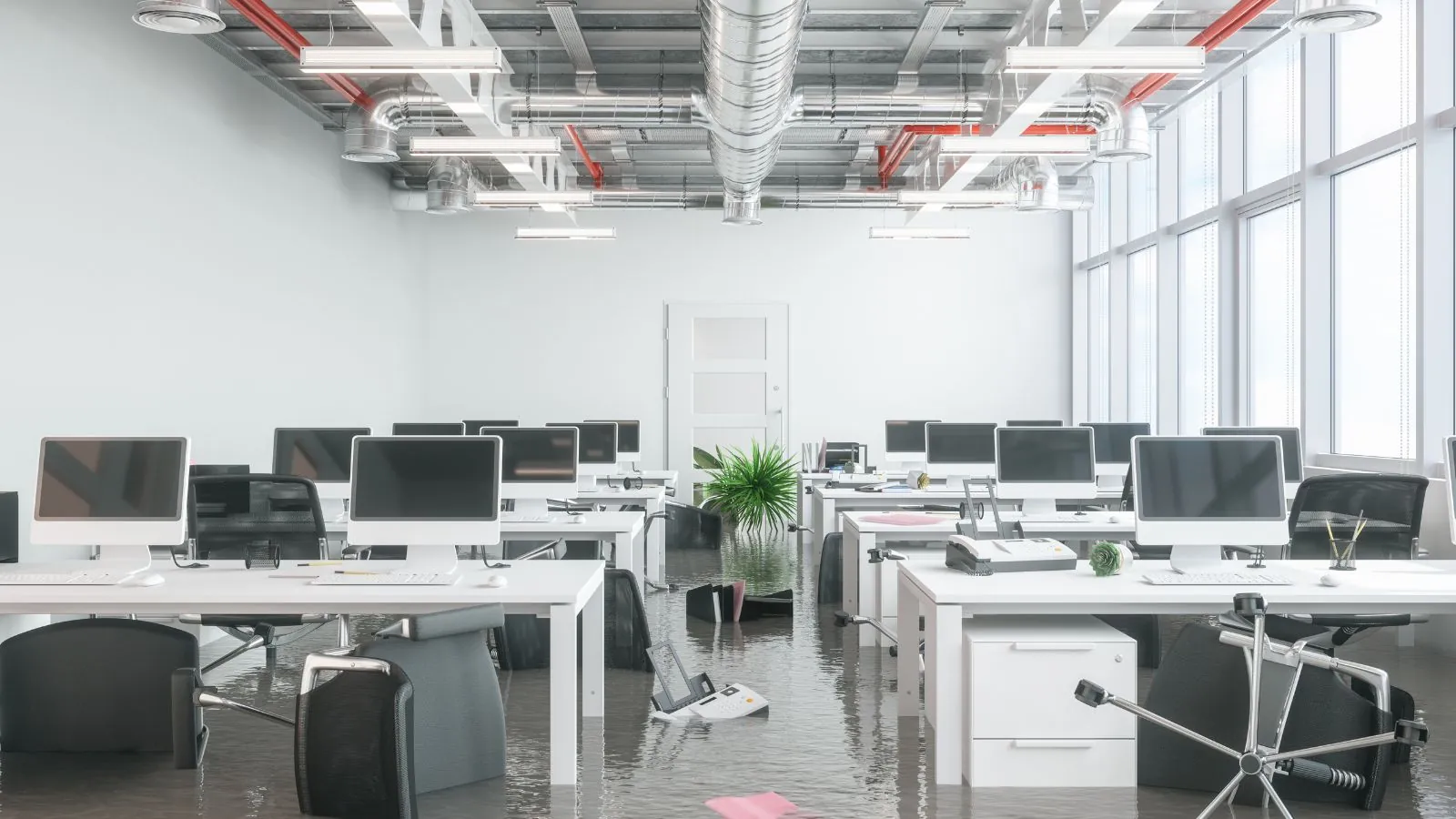
If water is loose in a commercial building, close the supply valve if you can reach it, keep people out of wet areas and call the 24/7 line. Describe the space, the source and what the water has reached so the crew can plan equipment before it arrives.
Commercial water damage restoration is the extraction, drying and cleanup of water losses in a commercial building. This page says plainly what our crews do, and what they do not. We handle water extraction, structural drying, cleanup and documentation. We do not claim industry specialties, and a building with special systems or hazards may need other trades on the job. See water mitigation and emergency water removal for the core steps.
What commercial water losses look like
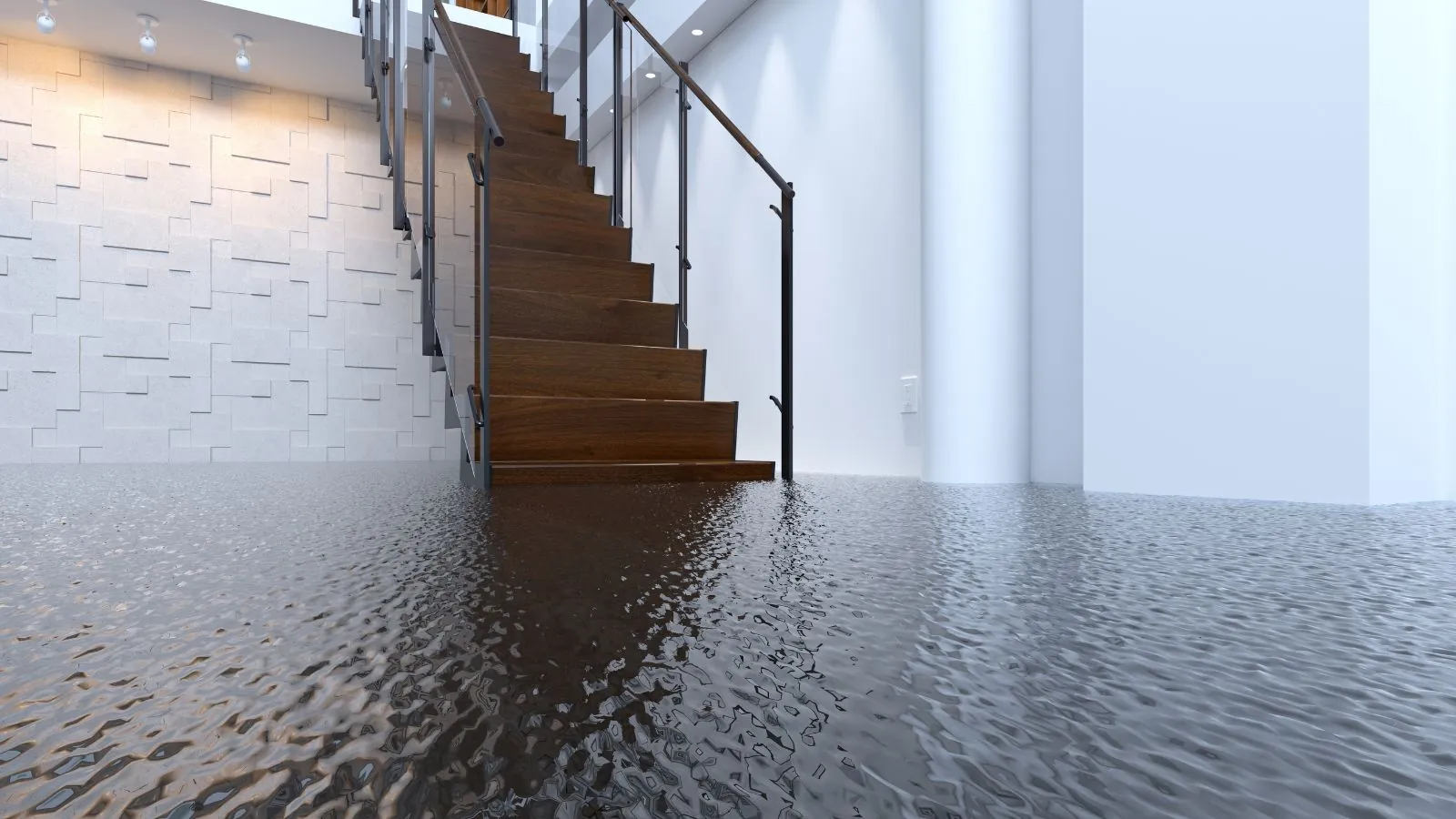
Commercial buildings share many of the same failures as homes, only with more space and more pipes. A supply line can split above a suspended ceiling. A roof can leak into a suite. A sprinkler head can discharge. A drain can back up in a shared restroom. Storm water can come in at a door or a loading area.
The difference is scale and shared space. Water in one unit can reach the unit below or next door, and a loss may involve a tenant, a property manager and an owner at the same time. Decisions about who calls, who pays and who has access need to be clear early.
After Tropical Storm Hilary in August 2023, Riverside County proclaimed a local emergency that cited flooding in neighborhoods, business districts and roadways, according to the county proclamation. That is a reminder that commercial areas in the valley are not exempt from storm water.
Signs of a commercial water loss
The signs are familiar, and the space around them is larger.
| What you notice | What it usually means | What to do |
|---|---|---|
| Ceiling tiles stained or sagging | Water is collecting above the ceiling | Keep people out from under it and call |
| Water on a floor with no visible source | A line in a wall, ceiling or slab may be leaking | Close the supply valve and call |
| Wet carpet along a shared wall | Water moved from a neighboring space | Note which spaces are involved and call |
| Sewage or dirty water from a drain | A line is backed up | Keep people away and see the sewage page |
| Musty smell in a closed room | Materials are staying wet | Call for readings before it spreads |
| Alarm or water flow from a fire system | A sprinkler discharged | Follow the building emergency plan first, then call |
A property manager or owner should decide who has authority to approve work.
First-hour safety in a commercial building
A commercial building may have more people, more electrical load and more rules. Start here.
- Move people out of wet areas and mark the area so no one walks through it.
- Close the nearest supply valve or the main water valve, and ask building maintenance if you cannot find it.
- Keep power off to wet areas and turn breakers off only from dry ground.
- Photograph the water, the source and the affected rooms before anything is moved.
- Follow the building emergency plan for alarms and evacuation if a fire system is involved.
- Call the 24/7 line and describe the suite, the source and any shared walls or floors.
Water loose in a commercial space? Call the line and describe the area.
☎ (760) 769-1159What our crews do on a commercial loss
The core steps are the same as in a home. Pumps and extraction units remove standing water. Moisture meters and a thermal imaging camera map what is wet, including areas above ceilings and behind walls. Wet materials that cannot be dried are removed.
Structural drying
Air movers and LGR dehumidifiers dry the space, and desiccant dehumidifiers can help in larger or cooler rooms. Crews log readings on each visit and use ANSI/IICRC S500 as the reference for planning and documenting the work. See structural drying for how the dry standard is set.
Cleanup and records
Debris is removed, surfaces are cleaned and the space is prepared for repair. Records include photos, moisture readings and a written scope, which help a property manager, an owner or an insurer review the loss.
What we do not do
We do not claim specialties in particular industries, and we do not promise arrival times or outcomes. We do not handle hazardous materials, fire damage or building systems. If a loss involves those, the right trade handles that part and we can work alongside them.
We also do not set the insurance coverage or approve who pays. A commercial property policy is a different contract from a homeowners policy, so the policy and your broker or agent decide coverage.
What changes the cost of commercial water damage work
Size and access drive the scope. The number of rooms, the square footage of wet flooring, the ceiling height and the amount of drywall or ceiling grid to remove all matter. Carpet tile, sheet vinyl and hard floors dry differently.
Time of day and working around occupied space can affect scheduling. Equipment days and the number of monitoring visits depend on the building materials and how deep the water went. The crew explains the scope and how the price is set before work begins.
Insurance, permits and who decides
Commercial coverage depends on the policy. Keep photos, a list of damaged items, the written scope and a log of calls, which are the same records the California Department of Insurance advises homeowners to keep. Notify your insurer or broker early.
If repairs involve opening walls or changing plumbing, the City of Indio says a building permit is required before work begins, with a short list of exemptions. The Building and Safety Division can say whether your repair needs one. The Contractors State License Board requires a license for work above a set dollar value, so ask contractors for theirs.
Mistakes to avoid and how to prepare
The common mistake is waiting for a decision chain to settle while water spreads. Another is moving stock or records without photographing them first. Do not close ceilings or walls until readings show they are dry.
Preparation is simple. Know where each supply valve is and share the location with staff. Keep a contact for the property manager and the line for water emergencies. Check ceilings and floors after storms.
Frequently asked questions
Yes. Dispatch takes commercial calls at any hour, and a same-day visit is possible when a crew is open. The dispatcher will not promise a time of arrival.
Close the supply valve if you can reach it and keep people out of wet areas until the crew arrives.
We work on commercial buildings that have a water loss and ordinary construction. We do not claim specialties, and the dispatcher will tell you if a job needs another trade.
Sometimes. Equipment makes noise and uses power, so the crew plans the layout and the schedule with the person in charge of the space.
Yes. The person with authority approves the scope. Crews provide photos, readings and a written scope to whoever needs them.
It depends on the policy. Commercial policies differ from homeowners policies, so ask your broker or agent and keep the records.