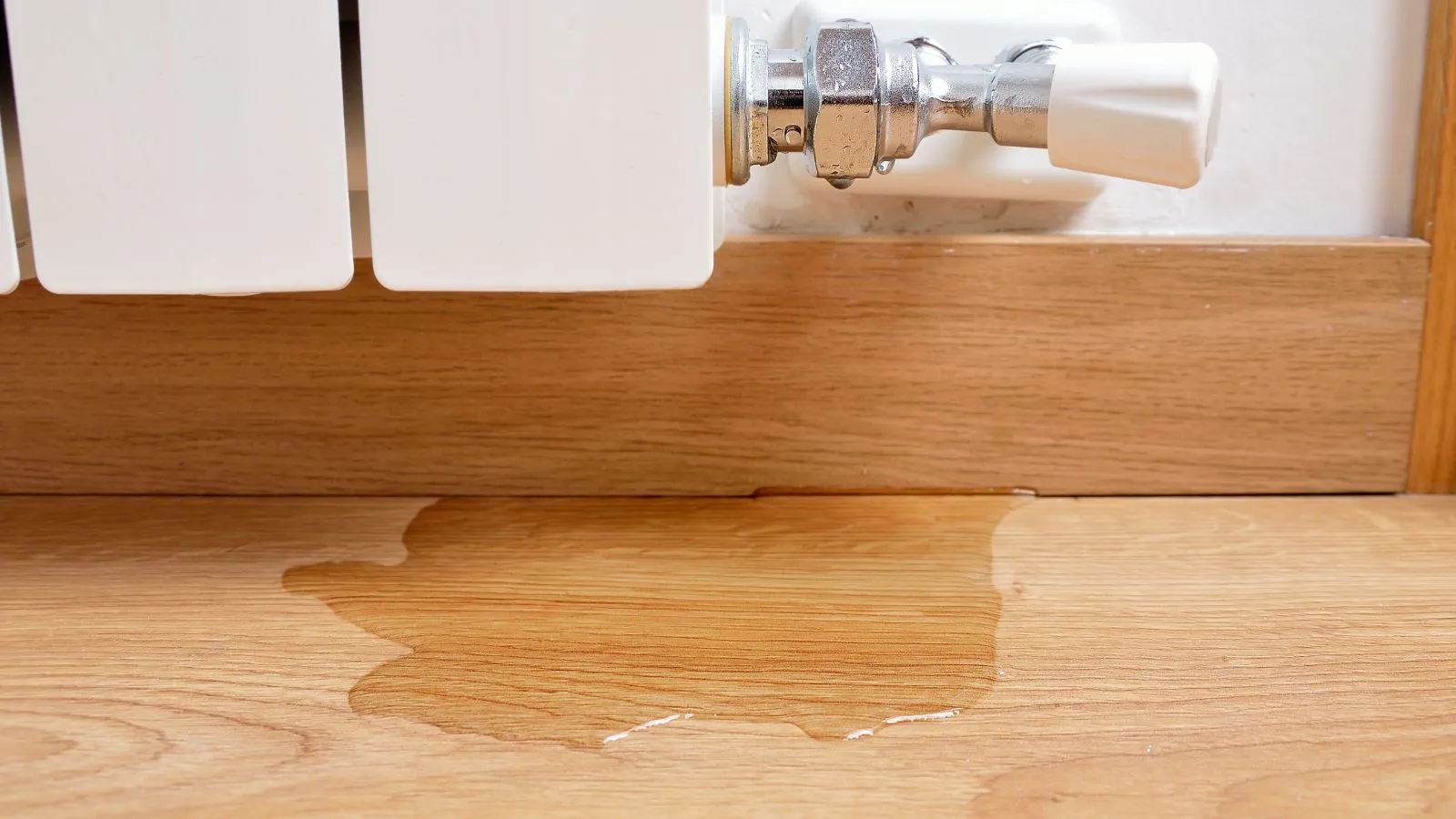
If water has reached a hardwood floor, stop the source, pull rugs and call the 24/7 line. The first day decides whether the floor can be dried in place or must be replaced. Wood absorbs water, swells and begins to change shape within hours.
Hardwood floor water damage repair covers drying, assessing and repairing wood floors that took on water. It is a material-based page. For the water removal that comes first, see emergency water removal, and for the wider rebuild, see water damage repair.
How water changes a wood floor
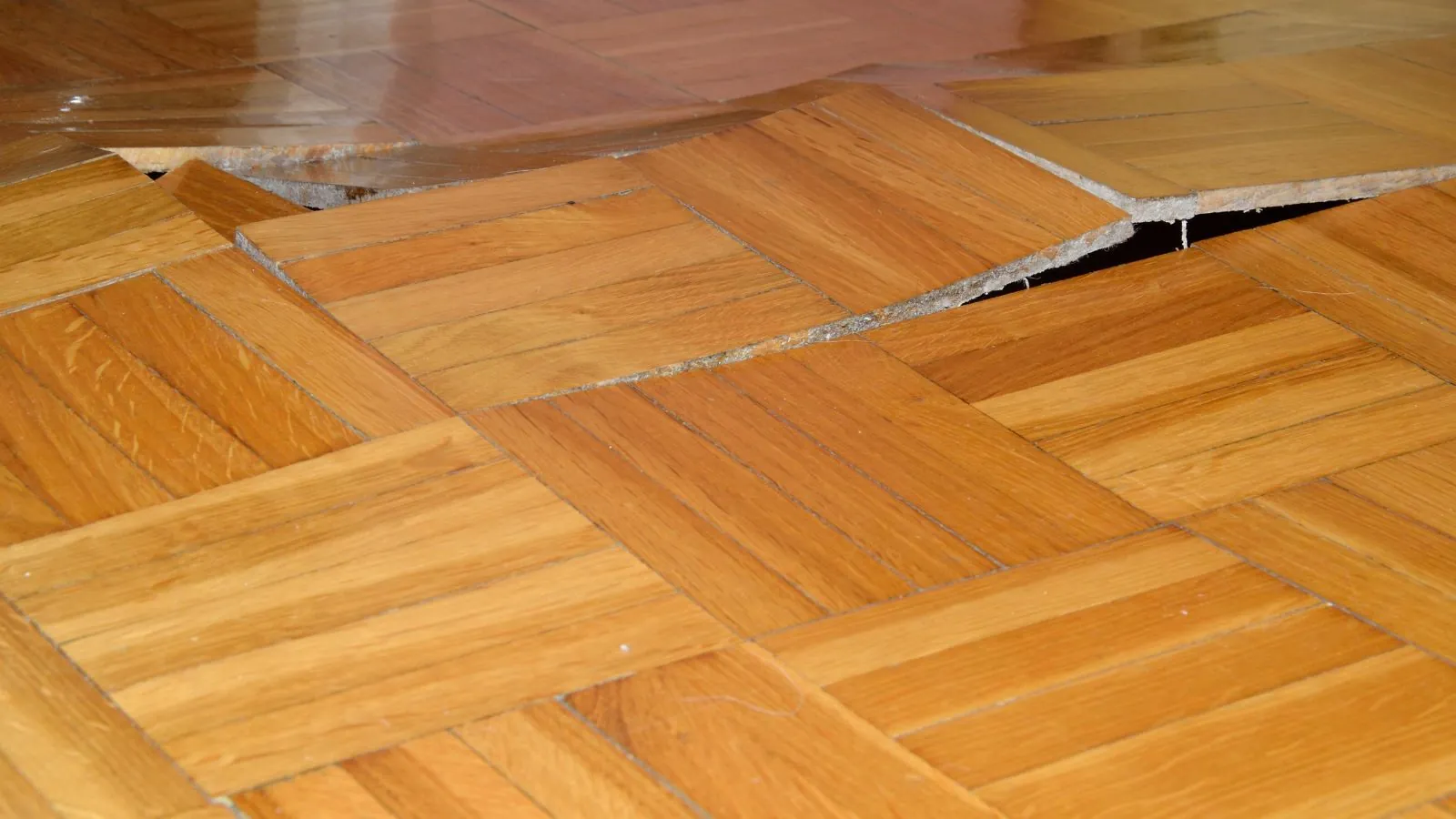
Wood is full of tiny channels, and it takes up water from below, from the edges and from the surface. When boards absorb more moisture at the bottom than the top, the edges rise and the center dips. This is called cupping. When the center rises higher than the edges, it is called crowning. When whole sections lift off the subfloor, it is called buckling.
Solid wood and engineered wood behave differently. Solid boards can often be dried and refinished. Engineered boards have layers glued together, and the glue and the thin top layer can fail when wet. Parquet floors made of small blocks lift as groups.
Floors over a slab or a crawl space can take on moisture from below. Floors on the second story can be soaked from above by a leak. A closed house left empty gives water more time to work.
Reading cupping, buckling and staining
The shape of the damage tells you how the water arrived.
| What you notice | What it usually means | What to do |
|---|---|---|
| Board edges higher than the center | Cupping from moisture below or at the sides | Stop the source and call for readings |
| Center of boards higher than the edges | Crowning, often after drying or sanding too fast | Do not sand until the floor is checked |
| Floor lifted in a section | Buckling from heavy moisture | Stay off it and call |
| Dark spots or black stains | Water and age have stained the wood or mold is present | Photograph and call |
| Gaps between boards | Boards have dried and shrunk after swelling | Wait for the floor to settle before judging it |
| Cracked or peeling finish | Water got under the coating | Do not wax or coat it, and call |
Visible damage is only part of the picture, and readings show the rest.
Safety steps on a wet wood floor
Wet wood floors are slippery, and electrical devices may be nearby.
- Stop the water at its source and wipe up standing water with towels.
- Walk carefully because wet wood is slippery and lifted boards can trip you.
- Lift rugs, mats and furniture legs off the floor and put foil or plastic under legs if they must stay.
- Keep power off to wet outlets and turn breakers off only from dry ground.
- Open interior doors so air can move, but do not run heat to dry the floor.
- Call the 24/7 line and say whether the floor is solid, engineered or parquet.
Hardwood floor wet? Call the line and describe the floor and where the water came from.
☎ (760) 769-1159How crews dry hardwood and decide what stays
Crews extract surface water first, then take moisture readings across the floor and the subfloor. A thermal imaging camera shows cooler wet areas, and a moisture meter built for wood reads the boards. Readings are compared with a dry area of the same floor.
Drying in place
Many floors can be dried in place if the water is caught early. Drying mats or panels pull water out of the boards with a vacuum, and air movers and LGR dehumidifiers dry the air around them. The crew checks the readings each visit and adjusts the equipment. ANSI/IICRC S500 is the reference crews use for planning the work.
When boards come out
Boards that delaminate, rot or stay wet despite drying are removed. Sometimes a few rows at the wall are pulled to let the floor dry from the edges. If the damage is wide, the floor may be replaced after the subfloor is dry.
Repair after drying
Once the floor reaches its normal moisture level, the repair decision can be made. Cupped boards often flatten as they dry. Some need sanding and refinishing to even out. Others need replacement of damaged boards, which are woven into the existing floor.
Do not sand or refinish too early. Wood that is still wet will shrink and gap later. Gaps can appear as boards dry to the moisture level of the home, and that can take time. A refinishing contractor or floor installer handles the final surface.
What changes the cost of hardwood floor repair
The cost depends on the area, the type of wood and the choice between drying in place and replacing. Solid floors are more likely to be dried and refinished. Engineered floors are more likely to be replaced.
The subfloor matters, as does the finish. Wide matching jobs and stained or patterned floors take longer to repair. The number of days of drying equipment also moves the scope. The crew explains the plan and how the price is set before work begins.
Insurance and a wet wood floor
A sudden leak that wets a floor is commonly addressed by a homeowners policy, while long-term moisture is often excluded. The California Department of Insurance advises making temporary repairs to prevent further damage and keeping a log of calls and paperwork. Drying the floor counts as one of those repairs.
The department says homeowners policies do not cover flood damage but do cover other kinds of water damage. Keep photos of the floor before drying, the readings and the written scope, and ask your insurer what your policy covers.
Mistakes to avoid and how to prevent damage
Do not cover a wet floor with a rug or plastic, which traps moisture. Do not use a heat gun or a space heater to dry it, because fast surface heat can crack and cup the boards. Do not sand or seal a floor that has not been checked.
Prevention is routine. Wipe up spills, watch for leaks under sinks and near appliances and keep an eye on floors over a slab, where moisture can rise from below. Use mats at exterior doors, especially after storms.
The Contractors State License Board says California requires a contractor license for flooring work above a set dollar value, so ask an installer for theirs. If the repair involves the subfloor, the City of Indio says a building permit is required before work begins, so ask the Building and Safety Division.
Other towns and related floors
Crews work in Indian Wells and Palm Desert as well. For how drying equipment is chosen, see structural drying.
Frequently asked questions
Yes. Calls are taken at night and on weekends, and a same-day visit is possible when a crew has an opening. No arrival time is promised.
Stop the source and lift rugs and furniture off the wet floor until the crew gets there.
Often, yes. If the floor is dried quickly and the readings come back to normal, cupped boards can flatten. Some floors need sanding and refinishing, and some boards must be replaced.
Wait until the floor has dried and settled to the moisture level of the home. The crew uses readings to say when. Refinishing too early can lock in problems.
Yes. Engineered boards have glued layers that can separate when wet, so they are more likely to need replacement than solid boards.
A sudden leak is commonly addressed by a homeowners policy, while long-term moisture is often excluded. Keep photos and receipts and ask your insurer.