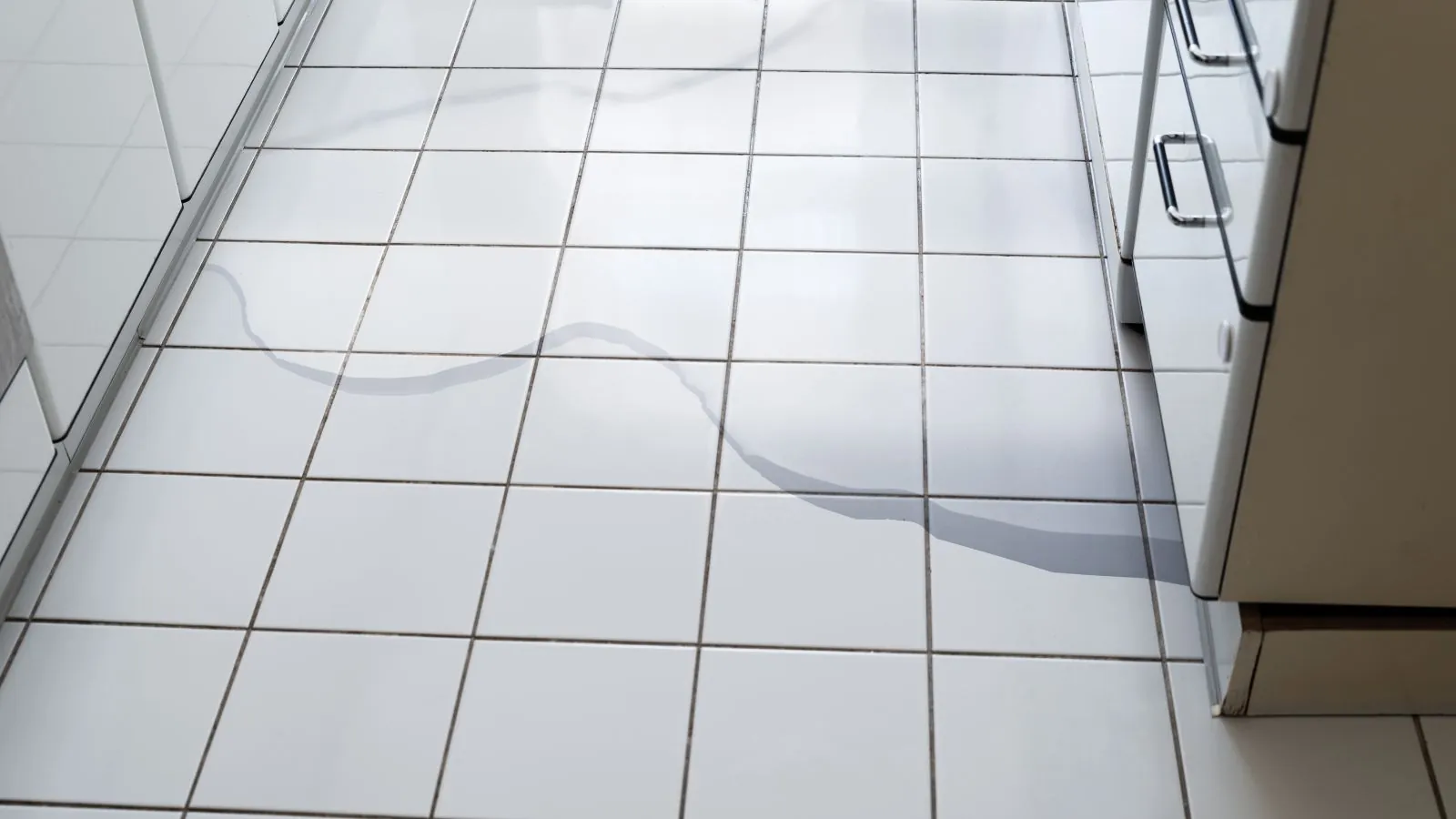
If water is leaking in a kitchen, close the shutoff valve under the sink or the main water valve and turn off power to wet outlets from dry ground. Then call the 24/7 line. Kitchens pack plumbing, appliances and electrical circuits into a small space, and water spreads quickly.
Kitchen water damage restoration is the extraction, drying and cleanup of water in a kitchen, including cabinet bases, toe kicks, subfloor and the walls behind them. It is a room-based page. If the source was a machine, see appliance leak water damage, and if a pipe split in the wall, see burst pipe water damage.
Where kitchen water comes from and why it hides
The most common sources sit under the sink. Supply lines, shutoff valves, faucet connections, the drain trap and the garbage disposal all leak slowly, and the cabinet floor hides the water. Dishwashers and refrigerator ice maker lines are the next group, and they leak behind panels and beneath appliances.
Water in a kitchen travels in a pattern. It soaks the cabinet floor, runs along the toe kick, wicks into the base of the drywall and sinks into the subfloor. Cabinets made of particleboard swell and fall apart when wet. Stone and laminate counters can hold water at the seams.
The Indio Water Authority supplies the water to your meter, according to its website, and every fixture after the meter is yours to maintain. Slow drips under a sink are easy to miss, especially in a vacant house, and they are the kind of leak that does the most hidden damage.
Kitchen leak clues and what they mean
Kitchen clues are small. These are the usual ones.
| What you notice | What it usually means | What to do |
|---|---|---|
| Swollen or soft cabinet floor under the sink | A supply or drain leak has been running | Shut off the supply under the sink and empty the cabinet |
| Dark staining on a cabinet side | Moisture has been present for some time | Photograph it and call for readings |
| Floor lifting near the dishwasher | Water is escaping under the machine | Stop using the dishwasher and call |
| Wet toe kick or baseboard | Water is traveling along the base of the cabinets | Turn off power to nearby outlets and call |
| Ceiling stain below an upstairs kitchen | A leak above is coming through | Keep out from under it and call |
| Musty smell in the cabinet | Materials are staying damp | Call before the cabinet bases come apart |
The wet area behind a cabinet is almost always larger than the visible stain.
Kitchen safety steps for the first hour
Water near outlets, appliances and gas lines needs care. Work through these in order.
- Close the shutoff valve under the sink or the main water valve to stop the flow.
- Do not touch outlets, cords or appliances while standing in water. Turn off breakers only from dry ground.
- If you have a gas range and smell gas, leave the house and call the gas utility from outside.
- Take everything out of the wet cabinets and photograph the damage before you move items.
- Move food from a refrigerator that has lost power, and do not tip appliances.
- Call the 24/7 line and say which fixture or machine was the source.
Kitchen wet and the source stopped? Call the 24/7 line to start extraction.
☎ (760) 769-1159How crews dry a kitchen without tearing out more than needed
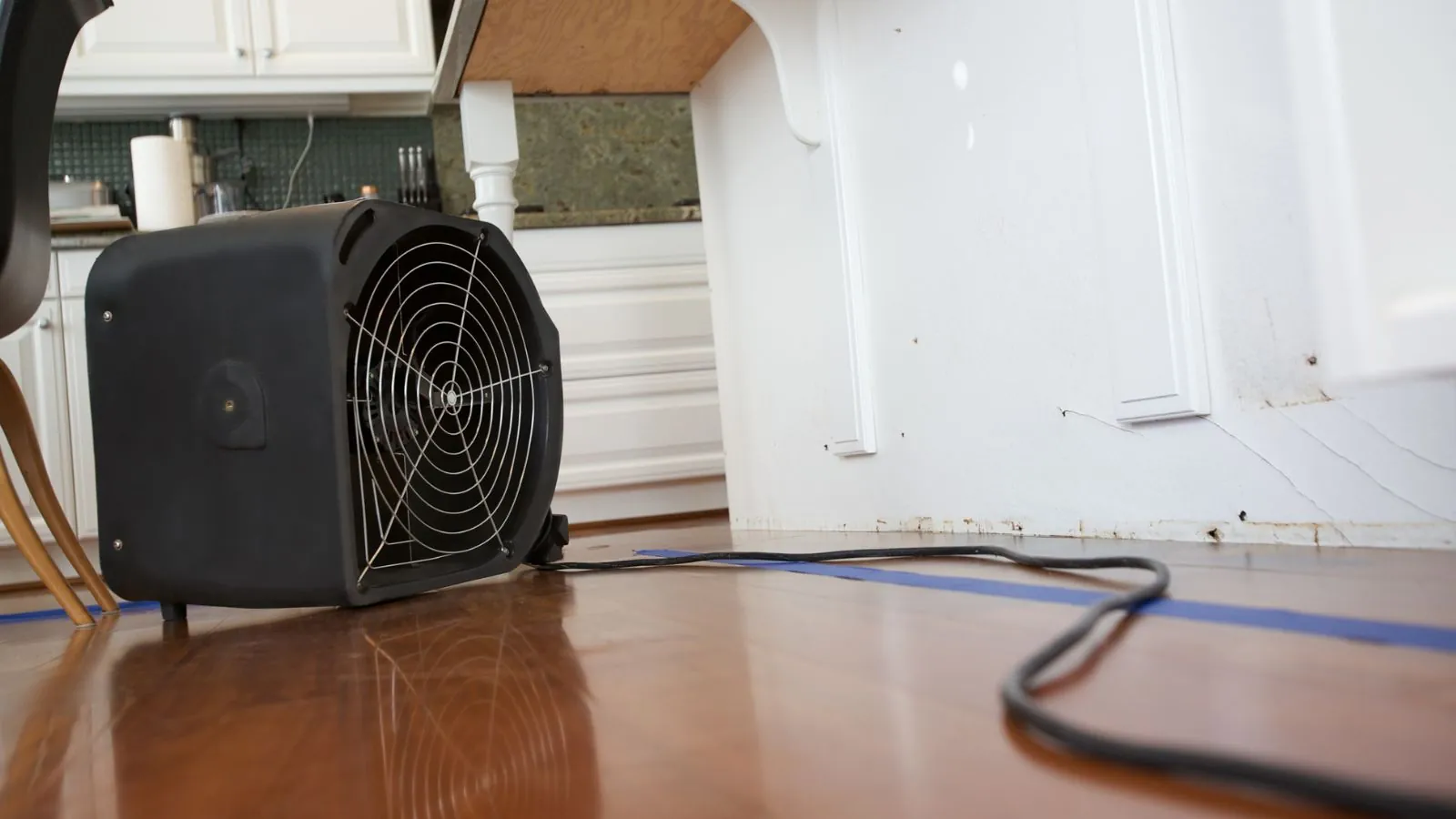
Crews extract standing water from the floor and cabinet bases, then map the moisture with meters and a thermal imaging camera. Toe kicks are removed so air can reach the cavity under the cabinets, and small access holes may be drilled so air movers can push dry air into closed spaces.
What is saved and what is removed
Solid wood and plywood cabinets often dry. Particleboard that has swollen is usually removed. Tile floors can often be dried in place, while laminate, vinyl plank and engineered wood that lifted come up. Counters may have to be detached if water got under them.
Drying and records
Air movers, LGR dehumidifiers and drying mats run until readings reach a dry standard. Crews follow ANSI/IICRC S500 as a reference and log readings each visit. When the kitchen is rebuilt, water damage repair covers the drywall, flooring and finishes.
What changes the cost of kitchen water damage work
The scope depends on the source, the time the leak ran and the materials involved. A short leak that wets one cabinet is a small job. A long leak under a sink can reach the subfloor and the walls on both sides.
Cabinet type matters. Replacing a run of base cabinets takes longer than drying them. Flooring that continues into other rooms adds area. Stone counters and built-in appliances add handling. Plumbing or appliance repair is a separate cost.
Insurance and a kitchen leak
A sudden kitchen leak is a common reason for claims, while slow seepage is often excluded. The California Department of Insurance advises making temporary repairs to prevent further damage and keeping a log of calls and paperwork. Closing the valve and drying the area are the repairs that count.
The department says homeowners policies do not cover flood but do cover other kinds of water damage, so a kitchen leak falls under the regular policy. Keep photos of the source, the receipts and the written scope, and ask your insurer what your policy covers.
Mistakes to avoid and how to stop a repeat leak
Do not put items back in a wet cabinet or leave a wet mat under the sink. Do not paint or caulk over swollen wood. Do not run a dishwasher that leaks to finish a load.
Prevention is small habits. Look under the sink once a month with a flashlight. Replace old rubber lines with braided ones. Use a leak sensor under the sink and behind the refrigerator.
If the repair involves moving plumbing or removing walls, the City of Indio says a building permit is required before work begins, and the Building and Safety Division can say whether yours needs one. A licensed plumber is needed for supply changes, since the Contractors State License Board requires a license above a set dollar value.
More towns and related leaks
Crews work in Palm Desert and La Quinta as well. A leak from a heater or a washer is covered on water heater leak cleanup.
Frequently asked questions
Yes. Someone is on the line every hour of the day, and a crew can come the same day if one is available. The dispatcher does not name an arrival time.
Close the shutoff under the sink and keep power off to wet outlets while you wait.
Sometimes. Solid wood and plywood cabinets often dry. Particleboard that has swollen is usually removed. Moisture readings decide what stays.
Not always. If water got under the counter or the cabinet below must be replaced, the counter may need to be detached. The crew checks first.
A sudden leak is commonly addressed by a homeowners policy, but slow seepage is often excluded. Keep photos and receipts and ask your insurer.
No. A plumber repairs the faucet, supply line or drain. Our crews handle the water and the drying.