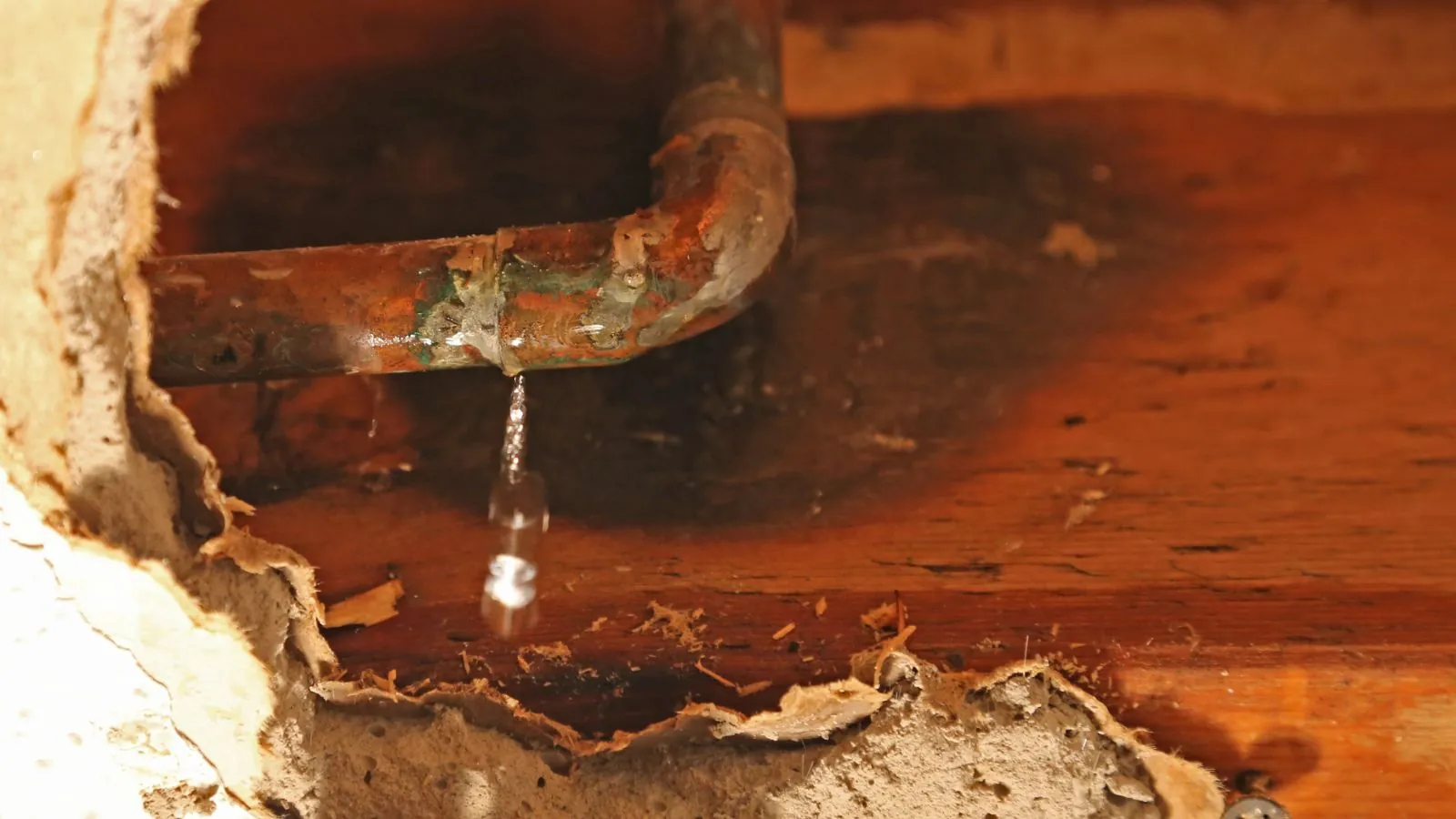
If a pipe has split, close the main water valve before anything else. Every minute the supply stays on adds water to the walls, the subfloor and the rooms below. Once the flow is stopped, call the 24/7 line and describe where the water is coming from.
Burst pipe water damage is the harm done by a failed supply line, a cracked fitting or a pinhole that opened into a leak: wet drywall, saturated insulation, soaked flooring and the moisture that keeps spreading after the pipe is shut off. Emergency water removal pulls the standing water and water mitigation dries what the water soaked.
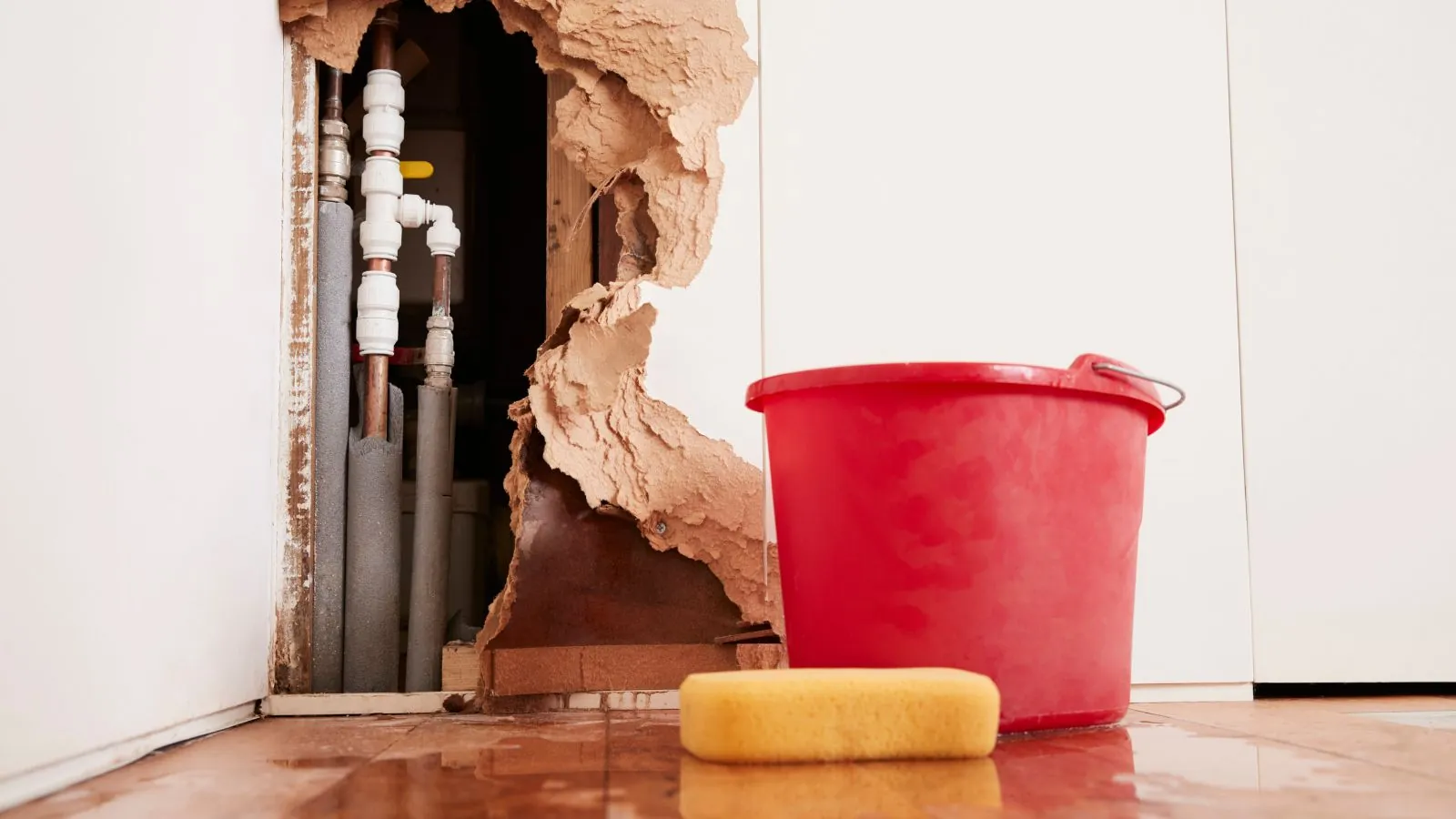
How pipes fail in Indio homes
Most people link burst pipes with freezing weather, but that is not the usual story in the low desert. Local failures tend to come from age and heat. Plastic fittings and flexible supply lines in a hot attic grow brittle over the years. Copper develops pinholes where mineral scale and corrosion thin the wall. Water pressure that runs high all day strains every joint in the house.
Irrigation lines are another common source. A broken sprinkler riser or a drip line cut by a shovel can send water toward a foundation or under a garage door. Homes that sit empty for part of the year add one more risk, because a split line in a closed house can run for days before a neighbor or a utility bill gives it away.
The location of the break decides the damage. A line in an attic drops water through a ceiling. A line in a wall cavity soaks drywall and insulation from the inside. A line under a slab is a different problem that has its own page, slab leak water damage.
Signs of a burst pipe and what each one means
Water has a way of showing up away from the pipe that caused it. These signs are the usual clues.
| What you notice | What it usually means | What to do |
|---|---|---|
| Spraying or a steady stream you can see | An exposed supply line or fitting has failed | Close the main valve and call the line |
| A brown or bubbling patch on a ceiling | Water is collecting above, often from an attic or upstairs line | Stay out from under it and keep power off to that room |
| Wall paint blistering or drywall feeling soft | A line inside the wall cavity is leaking | Shut the water off and do not drill or cut to look |
| Running sound with every tap closed | A pressurized line is leaking somewhere | Watch the meter, then close the main valve |
| Warm or damp floor spots | A hot water line may be leaking under the floor | Shut the water heater supply, then call a plumber and the 24/7 line |
| Musty smell in a closed room | Water has been present long enough to feed odor | Call soon because the materials may be staying wet |
A plumber repairs the pipe. The restoration crew handles the water the pipe released.
Safety steps for the first hour
These steps reduce the damage and keep you out of harm while the crew is on the way.
- Close the main water valve at the house. If you cannot find it, close the shutoff at the meter box and call the utility.
- Do not touch outlets, switches or appliances standing in water. Turn power off at the panel only if you can reach it on dry ground.
- Open a low faucet to drain what is left in the lines once the main is closed, which relieves pressure on the break.
- Move rugs, electronics, books and small furniture out of the wet area, and take photos before anything is moved.
- Stay out of rooms where the ceiling sags or bulges, because saturated drywall and insulation can fall.
- Call the 24/7 line, say where the pipe is, how long it ran and whether any water touched an outlet.
Water still running or already stopped? Either way, call and tell the dispatcher what you can see.
☎ (760) 769-1159Know which side of the meter the break is on
If the pipe that failed sits between the street and your meter, it belongs to the utility. The Indio Water Authority lists its emergency contact on its website, and after-hours calls are routed through police dispatch. A break after the meter is yours, and that is where a plumber and a restoration crew come in.
How crews handle a burst pipe loss
The first job is getting the water out. Submersible pumps handle standing water, and truck-mounted or portable extraction units pull it from carpet, pad and hard floors. Weighted wands press water out of carpet, and wet vacuums finish low corners.
Next comes the part most people cannot see. Moisture meters read drywall, baseboards and subfloor. A thermal imaging camera shows cooler, wetter areas behind walls and above ceilings, and it guides where the crew opens the structure.
Opening and drying
Wet insulation comes out first. Drywall that is soft or stained through is cut out above the wet line so the cavity can dry. Air movers push dry air across surfaces, and LGR dehumidifiers pull moisture out of the room.
Crews follow ANSI/IICRC S500 as a reference for water damage restoration, and they log readings each visit so you can see the structure reach a dry standard before it is closed up. When materials need to be rebuilt afterward, water damage repair covers the drywall, paint and flooring.
What changes the cost of burst pipe cleanup
No honest number can be given before someone sees the damage. These factors move the scope more than anything else.
Where the pipe broke and how long it ran
An attic line that ran for hours soaks insulation, drywall and often the rooms below. A short break at a hose bib may only wet a patio. Time matters because water keeps traveling into materials until the source is stopped and the drying starts.
What the water touched
Clean supply water is the simplest to handle. If it picked up dirt from a floor or soaked material that had been damp before, the plan changes. The number of rooms, the flooring type and how much drywall must be cut all add or remove labor and equipment days.
The crew explains the scope and how the price is set before work starts. A written scope and moisture records also help when an insurer reviews the loss.
Insurance and a burst pipe
A sudden pipe failure is the kind of loss homeowners policies usually address, while long-term seepage is often excluded. The California Department of Insurance advises homeowners to make temporary repairs that prevent further damage and to keep a log of calls and paperwork. Stopping the water and drying the structure are the repairs that count.
Flood and plumbing losses are treated differently. The department notes that homeowners policies do not cover flood but do cover other kinds of water damage, so a failed pipe falls under your regular policy, not a flood policy. Photos, a list of discarded items and the written scope help your adjuster review the claim. Ask your insurer what your own policy says.
Mistakes to avoid and how to prevent the next one
The common mistake is waiting for the plumber before calling for drying. The pipe repair and the drying can happen the same day. Another is closing walls over damp drywall, which traps moisture and invites odor. Do not run a household vacuum on a wet floor or use heat to dry a wall quickly, because surface heat hides the water inside.
Prevention is practical. Learn where your main valve is and test it once a year. Replace flexible hoses and old fittings that show corrosion. Shut the water off at the main when the house will be empty for weeks. Check attic lines when you service the air conditioner.
If replumbing is needed, the City of Indio says a building permit is required before work begins, with a short list of exemptions. Ask the Building and Safety Division whether your repair needs one.
Burst pipe losses around the valley
Crews travel from Indio to nearby towns where older plumbing and part-time residents raise the odds of a hidden leak. The page for La Quinta covers seasonal homes, and the page for Palm Desert covers the age of local housing and what it means for pipes.
Pipe stopped and walls still wet? The 24/7 line can send a crew to start drying.
☎ (760) 769-1159Frequently asked questions
Yes. Dispatch answers around the clock, holidays included, and a crew visit the same day is possible when a crew is open. The phone call will not give you an arrival time.
Until the crew gets there, close the main water valve, keep power off to wet areas if it is safe and move valuables out of the water.
Both are needed, and neither has to wait for the other. Close the main valve, call the 24/7 line for extraction and drying and call a plumber for the repair. The plumber fixes the pipe and the crew handles the water it released.
Water starts moving into drywall, insulation and flooring as soon as it escapes. Wet drywall and carpet pad can begin to break down within a day or two, which is why stopping the source and starting extraction early limits the loss.
A sudden pipe failure is commonly addressed by a homeowners policy, but the policy language decides. Keep photos, receipts and a log of calls, and ask your insurer or the California Department of Insurance if a claim stalls.
Sometimes. Moisture readings decide. Clean water in drywall caught quickly can occasionally be dried in place, while saturated insulation and soft drywall are usually removed so the cavity can dry.